
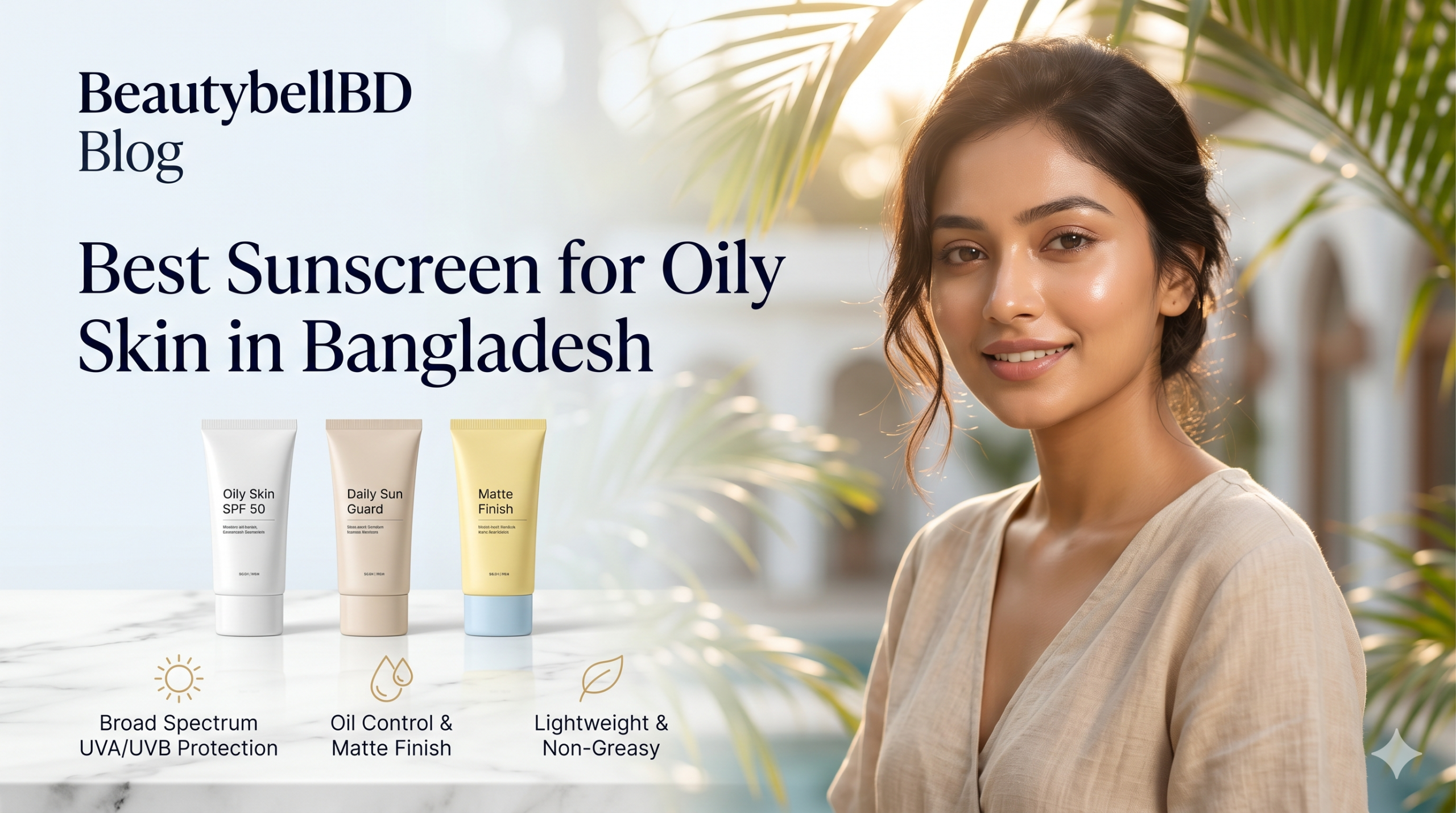
Best Sunscreen for Oily Skin in Bangladesh
Best Sunscreen for Oily Skin in Bangladesh: The Complete Guide
Finding the best sunscreen for oily skin in Bangladesh feels like a losing game. You apply sunscreen in the morning. By noon, your face looks like an oil slick. So you skip it the next day, and your skin pays for it later.
Bangladesh’s heat and humidity make this harder than almost anywhere else. Most sunscreens are built for drier climates, not for Dhaka in June.
This guide breaks down exactly what to look for, and reviews the best sunscreen for oily skin in Bangladesh across every budget.
What Is Sunscreen?
Sunscreen is a topical product that protects your skin from ultraviolet (UV) radiation. It works in one of two ways.
Mineral sunscreen (also called physical sunscreen) uses ingredients like zinc oxide and titanium dioxide. These sit on top of your skin and reflect UV rays away from you.
Chemical sunscreen uses compounds like avobenzone or octinoxate. These absorb UV rays and convert them into a small amount of heat, which then leaves your skin.
Both types are considered safe and effective by the American Academy of Dermatology, as long as you choose a broad-spectrum sunscreen with adequate SPF.
Broad-spectrum sunscreen protects against both UVA and UVB rays. UVB causes sunburn. UVA causes deeper skin damage, premature aging, and contributes to skin cancer risk over time.
Why Oily Skin Needs Sunscreen
Some people with oily skin assume they don’t need sunscreen because their skin already looks “protected” or shiny. This is a myth.
Oil production has nothing to do with UV protection. Your skin can be oily and still burn, still develop dark spots, and still age from sun exposure.
In fact, oily and acne-prone skin often deals with more sun-related problems, not fewer:
- Post-acne marks darken and take longer to fade without SPF protection
- Certain acne treatments (like retinoids and some acne medications) increase sun sensitivity
- Repeated UV exposure can trigger more melanin production, worsening hyperpigmentation around acne scars
The Skin Cancer Foundation recommends daily broad-spectrum sunscreen for every skin type, oily included. Skipping sunscreen because of oiliness trades a short-term comfort problem for a long-term skin health problem.
Why Sunscreen Feels Greasy on Oily Skin
If you’ve ever applied sunscreen and felt your face turn into a shine magnet within an hour, you’re not imagining it. A few real reasons this happens:
- Heavy emollients. Many sunscreens use oils and thick moisturizing agents designed for dry skin. On oily skin, these sit on top of already-active sebum production.
- Occlusive formulas. Some sunscreens form a thick film on the skin. This traps heat and sweat, which mixes with your natural oil.
- Wrong texture for your skin type. A rich cream sunscreen made for mature, dry skin will always feel heavier on oily skin, regardless of SPF.
- Not enough time to set. Sunscreen needs a few minutes to absorb. Applying makeup or touching your face too soon spreads the product around instead of letting it settle.
- Using too much or too little. Too much product overwhelms oily skin. Too little forces you to reapply constantly, which builds up oil and residue.
The fix isn’t skipping sunscreen. It’s choosing a formula built for oily skin, and applying it correctly.
How Bangladesh’s Hot and Humid Weather Affects Your Skin
Bangladesh’s climate is one of the toughest environments for oily and combination skin. Here’s why:
- High humidity (often 70-90%) slows sweat evaporation, so sweat and oil sit on your skin longer instead of drying off.
- Intense UV index, especially between March and October, means stronger UVA and UVB exposure even on cloudy days.
- Heat increases sebum production. Your sebaceous glands respond to temperature, so hotter days often mean an oilier T-zone.
- Pollution and dust in cities like Dhaka and Chattogram can mix with oil and sunscreen residue, contributing to clogged pores.
This combination means a sunscreen that works fine in a cooler, drier country can feel unbearable in Bangladesh. You need a formula specifically suited to hot, humid, high-UV conditions, not just any broad-spectrum sunscreen.
What Makes a Sunscreen Good for Oily Skin
A sunscreen built for oily skin in Bangladesh’s climate should check most of these boxes:
- Oil-free or non-comedogenic formula that won’t clog pores
- Gel, fluid, or lightweight lotion texture, not a heavy cream
- Matte or semi-matte finish without feeling chalky or drying
- SPF 30-50+ for daily protection, higher for outdoor exposure
- PA+++ or PA++++ rating for strong UVA protection
- Water resistant or sweat resistant formulation
- Minimal white cast, especially important for deeper skin tones common in Bangladesh
- Alcohol-free or low-alcohol so it doesn’t over-dry and trigger rebound oil production
- Contains niacinamide, hyaluronic acid, or oil-absorbing ingredients as a bonus, not a requirement
SPF Explained
SPF stands for Sun Protection Factor. It measures how well a sunscreen protects against UVB rays, the ones responsible for sunburn.
Quick answer for featured snippets: SPF 30 blocks about 97% of UVB rays. SPF 50 blocks about 98%. SPF 100 blocks about 99%. No sunscreen blocks 100% of UV rays.
The jump from SPF 30 to SPF 50 is small in percentage terms, but matters more in high-UV countries like Bangladesh, especially for people who spend time outdoors or commute daily.
For oily, acne-prone skin, dermatologists generally recommend SPF 30 to SPF 50, applied generously and reapplied every 2 to 3 hours during sun exposure.
PA Rating Explained
PA rating measures protection against UVA rays, the ones linked to premature aging, dark spots, and deeper skin damage.
- PA+ = some UVA protection
- PA++ = moderate UVA protection
- PA+++ = high UVA protection
- PA++++ = extremely high UVA protection
For Bangladesh’s UV intensity, PA+++ or PA++++ is the recommended standard, especially if you’re outdoors for more than 30 minutes at a time.
Featured snippet answer: SPF measures UVB protection and prevents sunburn. PA measures UVA protection and prevents long-term skin damage like wrinkles and dark spots. A good sunscreen needs both.
Mineral vs Chemical Sunscreen
| Factor | Mineral Sunscreen | Chemical Sunscreen |
|---|---|---|
| Main ingredients | Zinc oxide, titanium dioxide | Avobenzone, octinoxate, octocrylene |
| How it works | Reflects UV rays | Absorbs UV rays |
| Texture | Can feel thicker, sometimes leaves white cast | Usually lighter and more cosmetically elegant |
| Best for | Sensitive, acne-prone, reactive skin | Oily skin that wants a lightweight feel |
| Reapplication | Slightly more forgiving | Needs stricter reapplication |
| Common concern | White cast on deeper skin tones | Possible irritation for very sensitive skin |
Both types work well for oily skin in Bangladesh. Many modern formulas combine both for balanced protection with better texture.
Gel vs Cream Sunscreen
| Factor | Gel Sunscreen | Cream Sunscreen |
|---|---|---|
| Texture | Lightweight, watery, fast-absorbing | Richer, more moisturizing |
| Finish | Matte or semi-matte | Often dewy or slightly glossy |
| Best skin type | Oily, combination, acne-prone | Dry, normal, mature skin |
| Feel in humidity | Comfortable, low residue | Can feel heavy and greasy |
| Under makeup | Blends well, good makeup base | Can pill under makeup if too rich |
If you have oily skin in Bangladesh, gel sunscreen is almost always the better starting point over cream sunscreen.
Matte Finish vs Dewy Finish
Matte finish sunscreen absorbs excess oil and leaves a soft, non-shiny look. This is generally the better choice for oily and combination skin, especially in Bangladesh’s climate.
Dewy finish sunscreen adds a slight glow and hydration. This works better for dry or normal skin, or for oily skin only during cooler, less humid months.
Dermatologist Insight: A matte finish sunscreen doesn’t mean it dries out your skin. Good matte sunscreens still contain hydrating ingredients like hyaluronic acid, they just skip the heavy oils and waxes that create shine.
Best Sunscreen for Oily Skin in Bangladesh: Top 10 Picks
Prices below are approximate ranges available through Bangladeshi retailers and importers as of 2026. Prices vary by seller, so check current listings before buying.
Comparison Table
| Product | SPF | PA Rating | Skin Type | Texture | Finish | White Cast | Water Resistance | Price Range (BDT) | Best For |
|---|---|---|---|---|---|---|---|---|---|
| Beauty of Joseon Rice Probiotics Sunscreen | SPF 50+ | PA++++ | Oily, combination | Gel-cream | Semi-matte | Minimal | Moderate | 1,200-1,600 | Daily wear, sensitive-oily skin |
| Isntree Hyaluronic Acid Watery Sun Gel | SPF 50+ | PA++++ | Oily, dehydrated-oily | Watery gel | Matte | None | Moderate | 1,300-1,700 | Hydration without grease |
| La Roche-Posay Anthelios Oil Correct Gel | SPF 50+ | PA++++ | Oily, acne-prone | Gel | Matte | None | High | 2,200-2,800 | Acne-prone, breakout-sensitive skin |
| Biore UV Aqua Rich Watery Gel | SPF 50+ | PA++++ | Oily, combination | Watery gel | Matte | Minimal | High | 900-1,300 | Budget daily use |
| Skin Aqua UV Super Moisture Gel | SPF 50+ | PA++++ | Oily, normal | Gel | Semi-matte | Minimal | Moderate | 800-1,200 | First-time sunscreen users |
| Neutrogena Ultra Sheer Dry-Touch | SPF 50+ | PA+++ | Oily, combination | Lotion | Matte | Minimal | High | 1,100-1,500 | Outdoor daily protection |
| CeraVe Hydrating Mineral Sunscreen | SPF 30-50 | PA+++ | Oily, sensitive | Lotion | Semi-matte | Some | Moderate | 1,800-2,400 | Sensitive, reactive oily skin |
| COSRX Aloe Soothing Sun Cream | SPF 50 | PA+++ | Oily, acne-prone | Light cream | Semi-matte | Minimal | Moderate | 1,200-1,600 | Soothing sensitive breakouts |
| The Derma Co 1% Hyaluronic Sunscreen Aqua Gel | SPF 50 | PA++++ | Oily, combination | Gel | Matte | None | Moderate | 700-1,000 | Budget-conscious buyers |
| Minimalist SPF 50 PA++++ Sunscreen | SPF 50 | PA++++ | Oily, combination | Fluid | Matte | Minimal | Moderate | 900-1,300 | Ingredient-conscious buyers |
1. Beauty of Joseon Rice Probiotics Sunscreen
Ingredients: Chemical filters combined with rice extract and probiotics.
Texture: Lightweight gel-cream that absorbs quickly.
Finish: Semi-matte with a subtle glow, not greasy.
Pros:
- Very cosmetically elegant, blends invisibly
- Minimal white cast, good for most skin tones
- Comfortable under makeup
Cons:
- Contains fragrance-adjacent botanical extracts that may not suit very sensitive skin
- Slightly higher price than local drugstore options
Who should buy it: People with oily to combination skin who want a “no-makeup makeup” finish under sunscreen.
Who should avoid it: Those with fragrance sensitivity or very reactive, easily irritated skin.
Price in Bangladesh: Around 1,200-1,600 BDT depending on retailer.
Where to buy: Authorized Korean skincare retailers and online beauty stores in Bangladesh.
2. Isntree Hyaluronic Acid Watery Sun Gel
Ingredients: Chemical UV filters with hyaluronic acid for hydration.
Texture: Extremely watery, almost like a hydrating essence.
Finish: Matte, no residue.
Pros:
- Excellent for oily skin that still needs hydration
- Layers well under other skincare and makeup
- No white cast
Cons:
- Some users find the SPF protection needs more frequent reapplication in direct sun
- Bottle can be messy if not stored upright
Who should buy it: Oily, dehydrated skin that gets tight and shiny at the same time.
Who should avoid it: Those wanting a stronger physical/mineral barrier for very reactive skin.
Price in Bangladesh: Around 1,300-1,700 BDT.
Where to buy: K-beauty specialty stores and verified online sellers.
3. La Roche-Posay Anthelios Oil Correct Gel SPF 50
Ingredients: Broad-spectrum chemical filters with Airlicium technology designed to absorb excess oil.
Texture: Gel that turns semi-matte on application.
Finish: Strong matte finish, ideal for very oily and acne-prone skin.
Pros:
- Specifically formulated for oily and blemish-prone skin
- Backed by dermatologist recommendations
- Strong water resistance, good for humid days
Cons:
- Higher price point
- Contains alcohol, which may be drying for some users over time
Who should buy it: People with visibly oily, acne-prone skin looking for pharmacy-grade formulation.
Who should avoid it: Very dry or sensitive skin that reacts poorly to alcohol-based formulas.
Price in Bangladesh: Around 2,200-2,800 BDT.
Where to buy: Pharmacy chains and authorized dermocosmetic retailers.
4. Biore UV Aqua Rich Watery Gel SPF 50+
Ingredients: Chemical filters in a water-based gel.
Texture: Extremely light, almost like water.
Finish: Matte with a slight glow.
Pros:
- Very affordable for the protection level offered
- Widely available in Bangladesh
- Comfortable for everyday wear, even in extreme heat
Cons:
- Some users report needing to reapply more often outdoors
- Not ideal for very dry or flaky skin
Who should buy it: Anyone wanting reliable daily protection without spending much.
Who should avoid it: Those wanting extra hydration or anti-aging ingredients built in.
Price in Bangladesh: Around 900-1,300 BDT.
Where to buy: Supermarkets, drugstores, and online marketplaces.
5. Skin Aqua UV Super Moisture Gel SPF 50+
Ingredients: Chemical filters with moisturizing agents like hyaluronic acid.
Texture: Gel that turns into a light lotion on the skin.
Finish: Semi-matte, natural looking.
Pros:
- Beginner-friendly texture
- Good balance of hydration and oil control
- Budget-friendly
Cons:
- Some batches have a noticeable scent
- Moderate water resistance compared to premium options
Who should buy it: First-time sunscreen users transitioning from no sunscreen to daily use.
Who should avoid it: Those sensitive to fragrance.
Price in Bangladesh: Around 800-1,200 BDT.
Where to buy: Drugstores and cosmetic retailers.
6. Neutrogena Ultra Sheer Dry-Touch SPF 50+
Ingredients: Broad-spectrum chemical filters.
Texture: Lightweight lotion.
Finish: True matte, “dry-touch” as the name suggests.
Pros:
- Long-standing dermatologist recommended brand
- Reliable broad-spectrum protection
- Good for outdoor activity and sports
Cons:
- PA rating is often PA+++ rather than PA++++
- Some formulations contain oxybenzone, which certain users prefer to avoid
Who should buy it: People who spend significant time outdoors and want proven sun protection.
Who should avoid it: Those specifically seeking mineral-only formulas.
Price in Bangladesh: Around 1,100-1,500 BDT.
Where to buy: Pharmacy chains and major supermarkets.
7. CeraVe Hydrating Mineral Sunscreen SPF 30-50
Ingredients: Zinc oxide and titanium dioxide with ceramides and niacinamide.
Texture: Lotion, slightly richer than pure gel formulas.
Finish: Semi-matte with a soft glow.
Pros:
- Mineral formula suits sensitive, reactive oily skin
- Contains skin barrier-supporting ceramides
- Fragrance-free
Cons:
- Can leave a mild white cast on deeper skin tones
- Slightly heavier than pure gel sunscreens
Who should buy it: Oily skin that is also sensitive or barrier-compromised from over-exfoliation or acne treatments.
Who should avoid it: Those who dislike any white cast at all.
Price in Bangladesh: Around 1,800-2,400 BDT.
Where to buy: Pharmacy chains and authorized skincare retailers.
8. COSRX Aloe Soothing Sun Cream SPF 50
Ingredients: Chemical filters with aloe vera extract.
Texture: Light cream, not gel.
Finish: Semi-matte, calming feel.
Pros:
- Soothing for irritated, breakout-prone skin
- Minimal white cast
- Comfortable for daily wear
Cons:
- Slightly less matte than pure gel options
- May feel too light for very oily skin in peak humidity
Who should buy it: Acne-prone skin dealing with redness or irritation alongside oiliness.
Who should avoid it: Extremely oily skin needing maximum oil control.
Price in Bangladesh: Around 1,200-1,600 BDT.
Where to buy: K-beauty retailers and online stores.
9. The Derma Co 1% Hyaluronic Sunscreen Aqua Gel SPF 50
Ingredients: Chemical filters with hyaluronic acid.
Texture: Watery gel.
Finish: Matte, no residue.
Pros:
- Very affordable
- Non-comedogenic and oil-free formula
- No white cast
Cons:
- Reapplication needed more frequently in direct outdoor sun
- Limited availability compared to bigger global brands
Who should buy it: Budget-conscious buyers wanting solid daily protection.
Who should avoid it: Those wanting a premium or dermatologist-clinic brand name.
Price in Bangladesh: Around 700-1,000 BDT.
Where to buy: Online marketplaces and select cosmetic stores.
10. Minimalist SPF 50 PA++++ Sunscreen
Ingredients: Chemical filters with a simple, transparent ingredient list.
Texture: Fluid, lightweight.
Finish: Matte.
Pros:
- Transparent about ingredient percentages
- Good oil control
- Reasonably priced for the protection level
Cons:
- Newer brand with a smaller track record
- Limited stock availability at times
Who should buy it: Ingredient-conscious buyers who like knowing exact formulation details.
Who should avoid it: Those who prefer long-established, widely reviewed brands.
Price in Bangladesh: Around 900-1,300 BDT.
Where to buy: Online beauty retailers.
Pro Tip: Don’t judge a sunscreen by SPF number alone. A well-formulated SPF 30 gel that you’ll actually reapply beats an SPF 50 cream you avoid because it feels heavy.
If you’re also managing breakouts alongside oiliness, pairing your sunscreen choice with a proper acne-focused skincare routine makes a bigger difference than sunscreen alone.
Buying Guide: How to Choose the Right Sunscreen for Oily Skin
How to Choose Sunscreen
Ask yourself these questions before buying:
- Is it labeled oil-free or non-comedogenic?
- Does it have SPF 30 or higher?
- Does it list PA+++ or PA++++?
- Is the texture a gel, fluid, or light lotion, not a thick cream?
- Does it fit your budget for daily, repeated use?
Ingredients to Look For
- Niacinamide – helps regulate oil production and calm redness
- Zinc oxide – mineral protection with mild oil-absorbing properties
- Hyaluronic acid – hydrates without adding heaviness
- Silica or dimethicone-based powders – help absorb shine and create a matte finish
Ingredients to Avoid or Watch For
- Heavy oils like coconut oil or mineral oil – can clog pores on already oily skin
- High alcohol content – can cause rebound oil production if overused
- Fragrance – if you have reactive or acne-prone skin, unscented is safer
- Comedogenic waxes – check ingredient lists if you’re breakout-prone
Budget Recommendations
Products like The Derma Co Aqua Gel, Biore UV Aqua Rich, and Skin Aqua UV Super Moisture Gel deliver solid protection under 1,300 BDT.
Premium Recommendations
La Roche-Posay Anthelios Oil Correct Gel and CeraVe Hydrating Mineral Sunscreen sit at the higher end, backed by pharmacy and dermatologist credibility.
Drugstore Recommendations
Neutrogena Ultra Sheer Dry-Touch and Biore UV Aqua Rich are widely available in Bangladeshi supermarkets and pharmacies, making them easy repeat purchases.
If you’re unsure where to start, browsing a curated oily skin product collection can narrow things down faster than comparing every option individually.
Common Mistakes People Make With Sunscreen
- Skipping sunscreen indoors. UVA rays pass through windows. Indoor days still need protection, especially if you sit near windows.
- Applying too little product. Most people use half the recommended amount, cutting real SPF protection significantly.
- Not reapplying during the day. Sunscreen breaks down from sweat, oil, and sun exposure. One morning application isn’t enough for a full day outdoors.
- Choosing sunscreen based on SPF number alone. A high SPF with poor PA rating still leaves you exposed to UVA damage.
- Using expired sunscreen. Active ingredients degrade over time, reducing protection.
- Applying sunscreen last in a skincare routine but before moisturizer. Sunscreen should generally go on as the final step, after moisturizer, before makeup.
- Avoiding sunscreen because of past greasy experiences. One bad formula doesn’t mean all sunscreens will feel the same. Oily skin needs a different texture, not no sunscreen.
- Mixing too many active ingredients with sunscreen. Combining retinoids, exfoliating acids, and sunscreen without spacing them out can irritate oily, acne-prone skin.
- Not blending sunscreen fully into the hairline, ears, and neck. These areas burn and age just like the face.
- Choosing scent over suitability. A pleasant fragrance doesn’t matter if the formula clogs your pores.
- Believing darker skin doesn’t need sunscreen. Melanin offers some natural protection, but it doesn’t fully prevent UV damage or skin cancer risk.
Step-by-Step Guide: How to Apply Sunscreen Correctly
How Much Sunscreen to Use
Use about a nickel-sized amount (roughly 1/4 to 1/2 teaspoon) for your face alone. Most people apply far less than this, which lowers actual protection significantly below the labeled SPF.
How to Apply Sunscreen
- Cleanse your face first.
- Apply any treatment products (like niacinamide serum) and let them absorb.
- Moisturize if your skin needs it.
- Apply sunscreen generously, covering face, ears, neck, and hairline.
- Wait 2 to 5 minutes before applying makeup or touching your face.
How Often to Reapply
Reapply every 2 hours during direct sun exposure. If you’re indoors most of the day, reapplying once around midday is usually sufficient, especially near windows.
How to Layer Sunscreen With Skincare
Order matters:
Cleanser → Toner (optional) → Serum (like niacinamide or hyaluronic acid) → Moisturizer → Sunscreen → Makeup
Sunscreen should almost always be the last skincare step, applied before any makeup product.
How to Use Sunscreen Under Makeup
- Choose a matte finish, fast-absorbing sunscreen to avoid pilling
- Wait a few minutes before applying foundation or concealer
- Consider a mattifying setting powder afterward if you need extra shine control through the day
- Keep a compact SPF-infused powder for midday touch-ups over makeup
Expert Tip: If reapplying liquid sunscreen over makeup feels impractical, an SPF setting powder is a realistic backup for midday reapplication, though it should not replace your initial sunscreen application.
Featured Snippet Answers
What is the best sunscreen for oily skin in Bangladesh? The best sunscreen for oily skin in Bangladesh is a broad-spectrum, oil-free gel sunscreen with SPF 30-50 and PA+++ or higher. Options like Biore UV Aqua Rich, La Roche-Posay Anthelios Oil Correct Gel, and Beauty of Joseon Rice Probiotics Sunscreen work well in hot, humid weather.
Why should people with oily skin wear sunscreen? Oily skin still burns and ages from UV exposure. Sunscreen also prevents post-acne dark marks from worsening and protects skin during use of acne treatments that increase sun sensitivity.
Which SPF is best for oily skin? SPF 30 to SPF 50 works well for most oily skin, paired with a lightweight gel or fluid texture and PA+++ or PA++++ rating for strong UVA protection.
Can oily skin skip sunscreen? No. Oil production doesn’t protect against UV rays. Skipping sunscreen increases the risk of sunburn, premature aging, and worsened hyperpigmentation, regardless of skin type.
What ingredients should oily skin avoid in sunscreen? Oily skin should avoid heavy oils, thick waxes, and highly occlusive emollients in sunscreen. These ingredients can trap sebum and contribute to clogged pores and breakouts.
What is the difference between SPF and PA? SPF measures protection against UVB rays, which cause sunburn. PA measures protection against UVA rays, which cause premature aging and deeper skin damage. A complete sunscreen needs both ratings.
Seasonal Tip
Bangladesh’s UV index stays high most of the year, but March through October brings the most intense sun exposure. During these months, prioritize SPF 50 and PA++++ formulas, and reapply more frequently if you’re outdoors.
Must Know
Sunscreen expiration matters. Most sunscreens last 12 months after opening. Write the opening date on the bottle if the packaging doesn’t already track it.
Buying Tip
Always check for a batch code or manufacturing date sticker when buying imported Korean or Japanese sunscreens in Bangladesh. This helps confirm the product hasn’t been sitting in poor storage conditions for too long.
Frequently Asked Questions
Is gel sunscreen better than cream sunscreen for oily skin in Bangladesh? Yes, in most cases. Gel sunscreen absorbs faster, feels lighter, and leaves a matte finish that suits Bangladesh’s hot, humid climate. Cream sunscreen tends to feel heavier and can increase shine throughout the day. If your skin gets dehydrated from gel formulas, a lightweight gel-cream hybrid can offer a middle ground without the greasy feel of a traditional cream.
Does sunscreen cause acne breakouts? Sunscreen itself doesn’t directly cause acne, but the wrong formula can contribute to clogged pores. Heavy, comedogenic sunscreens are more likely to trigger breakouts on oily and acne-prone skin. Choosing an oil-free, non-comedogenic sunscreen labeled for acne-prone skin significantly lowers this risk. If breakouts continue, it’s worth reviewing your full acne routine alongside your sunscreen choice.
Can I use sunscreen every day, even indoors? Yes. UVA rays penetrate glass windows and contribute to skin aging even without direct sunlight. Daily sunscreen use, including on cloudy or indoor days, is standard dermatologist advice for long-term skin health, particularly for anyone working near windows for extended hours.
What SPF do dermatologists recommend for daily use? Most dermatologists recommend SPF 30 as a minimum for daily use, with SPF 50 preferred for people spending significant time outdoors or living in high-UV regions like Bangladesh. Consistency in daily application matters more than chasing the highest possible SPF number.
Is mineral sunscreen better than chemical sunscreen for sensitive, oily skin? Mineral sunscreen tends to suit sensitive, reactive oily skin better since it sits on the skin rather than being absorbed. Chemical sunscreen generally offers a lighter, more cosmetically elegant texture. Many people with oily but non-sensitive skin prefer chemical formulas for daily wear, while sensitive oily skin often does better with mineral or hybrid formulas.
How do I stop my sunscreen from looking greasy under makeup? Choose a matte finish, oil-free sunscreen and let it fully absorb for a few minutes before applying makeup. Using a lightweight, oil-free foundation on top and blotting with a setting powder midday helps maintain a matte look through humid weather.
Do I need a separate sunscreen for men versus women? No functional difference exists between sunscreen marketed for men versus women, aside from packaging and fragrance choices. Anyone with oily skin should choose based on texture, SPF, and PA rating rather than gender-targeted marketing.
Is sunscreen necessary for teenagers with oily, acne-prone skin? Yes. Teenage skin is still developing and can be sensitive to sun exposure, especially when using topical acne treatments that increase photosensitivity. A lightweight, oil-free sunscreen supports both acne management and long-term skin health.
What is white cast, and how do I avoid it? White cast is a grayish or purplish tint left on the skin, common with some mineral sunscreens, especially on deeper skin tones. Choosing tinted mineral sunscreens or well-formulated chemical sunscreens generally avoids this issue.
How does blue light exposure relate to sunscreen for oily skin? Blue light from screens and devices may contribute to pigmentation issues over prolonged exposure, though research is still developing in this area. Some sunscreens include iron oxides or antioxidants that offer added defense against blue light, which can be a useful bonus feature for people who spend long hours on screens.
Conclusion
Oily skin in Bangladesh doesn’t have to mean choosing between sun protection and a shine-free face. The right formula, gel-based, oil-free, SPF 30-50, with PA+++ or higher, solves both problems at once.
Start by identifying whether your main concern is acne, dehydration, or pure oil control, then match that need to one of the sunscreens reviewed above. A well-chosen sunscreen fits into your existing skincare routine rather than working against it.
If you’re ready to try a proven oily-skin formula, the Deconstruct Gel Sunscreen SPF 50 PA+++ is a solid starting point built specifically for this skin type and climate.
Your skin will thank you for the sunscreen you actually wear consistently, not just the one with the highest number on the bottle.


 English
 Bengali