How to Use Lipzlite Lip Lightening Cream: A Practical Guide for Dark and Uneven Lips
Why Lip Pigmentation Can Be Hard to Manage
Dark or uneven lips can develop for several reasons, including sun exposure, repeated irritation, smoking, dryness, and post-inflammatory pigmentation. Hyperpigmentation happens when skin produces more melanin than usual, which can make an area look darker than the surrounding skin.
If you want to learn how to use Lipzlite Lip Lightening Cream, the key is not to apply more product. The better approach is to use a small amount, follow a consistent routine, and protect your lips during the day. This guide explains how Lipzlite Cream fits into a lip-care routine, what its ingredients do, how to apply it, and what habits can affect your results.
What Is Lipzlite Lip Lightening Cream?
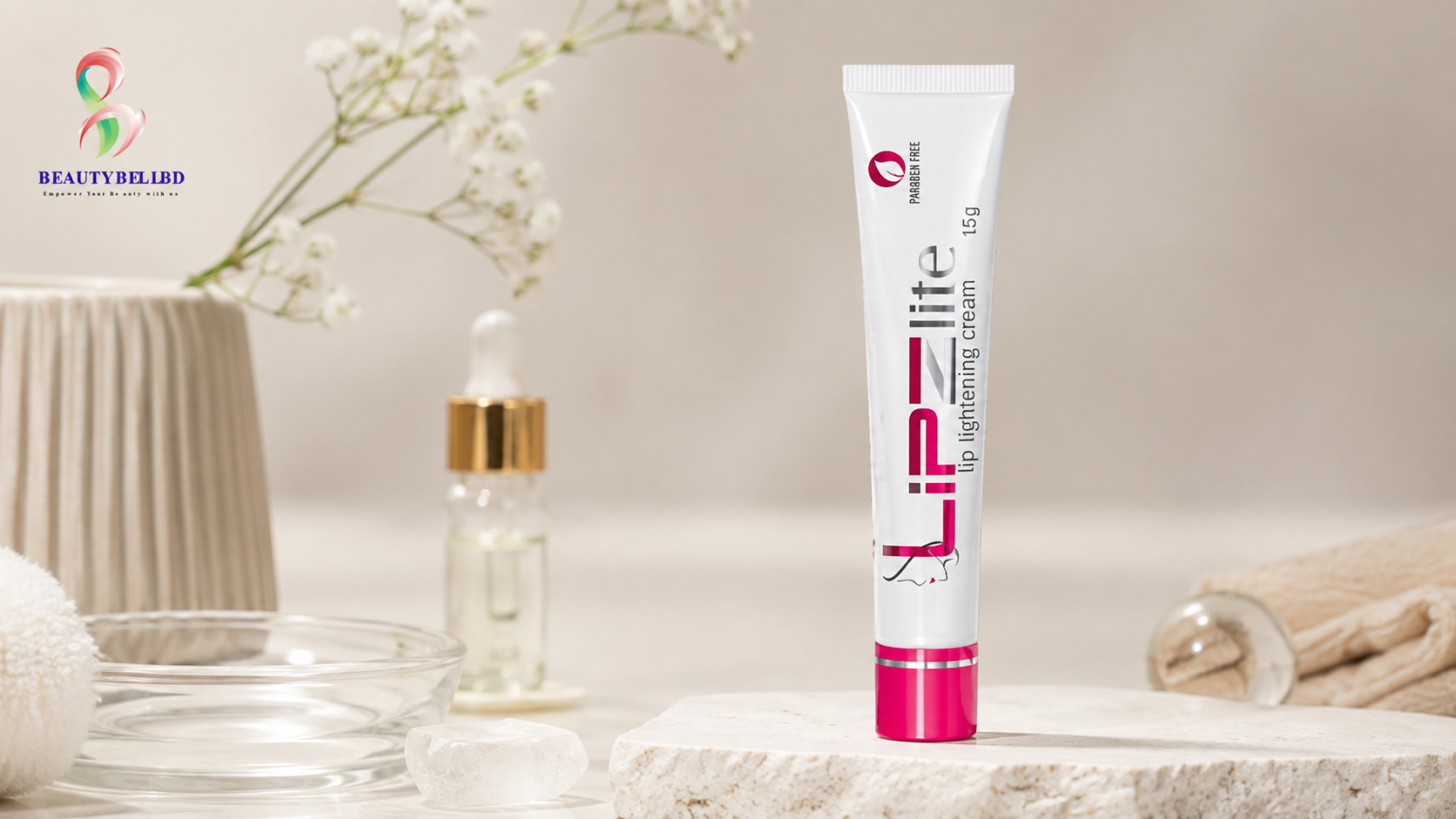
Lipzlite Lip Lightening Cream is a 15g cream marketed for pigmented lips and other areas of uneven skin tone. Product listings describe ingredients such as Kojic Acid Dipalmitate, Arbutin, glycolic acid, liquorice extract, niacinamide, and vitamins.
The formula is designed around ingredients commonly used in pigmentation-focused skincare. Kojic Acid Dipalmitate and Arbutin are included in the listed formulation and are often discussed for their role in melanin-related pigmentation care.
The product is not a tool for changing your natural lip colour. Its purpose is to help manage excess pigmentation and uneven tone.
You can view the Lipzlite Lip Lightening Cream product page here:
Why Do Lips Become Dark?
Before you focus on how to use Lipzlite Lip Lightening Cream, look at what may be causing the pigmentation.
Treating the visible colour without addressing the trigger can make the process slower.
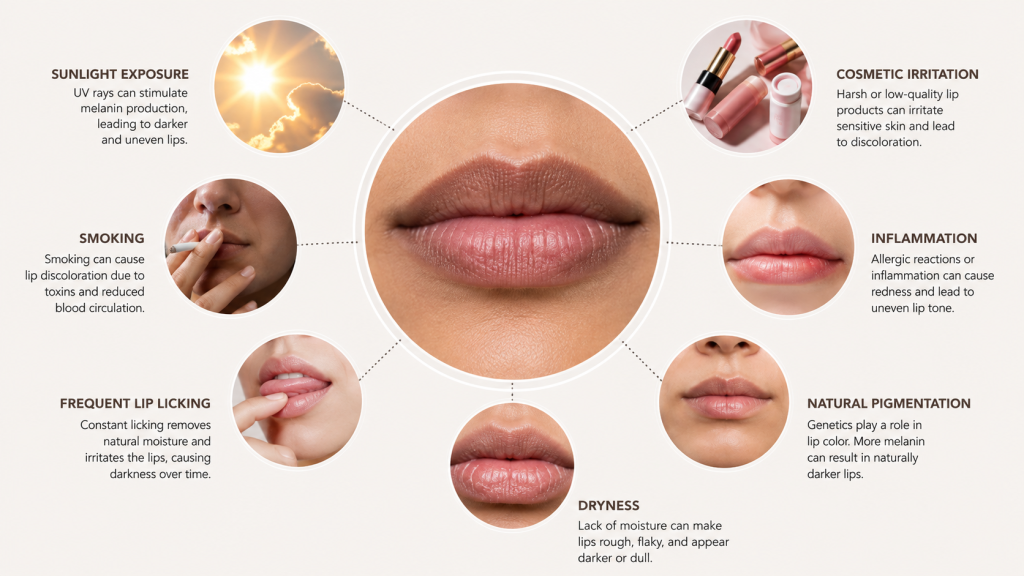
Common factors include:
- Sun exposure
- Smoking
- Frequent lip licking
- Repeated dryness or chapping
- Irritation from lip products
- Allergic reactions to cosmetic ingredients
- Hormonal changes
- Post-inflammatory pigmentation
- Certain medicines
- Natural pigmentation
Hyperpigmentation occurs when melanin production increases in an area. The American Academy of Dermatology explains that dark spots can appear after inflammation or irritation, and removing the trigger can help prevent new pigmentation.
For lips, daily exposure matters because the lips receive direct environmental exposure while often getting less sun protection than facial skin.
Is Lip Darkening Always Caused by a Deficiency?
Not always.
People sometimes connect dark lips with vitamin deficiencies, but pigmentation has many possible causes. A nutritional deficiency is only one possible explanation.
If your lip colour changes after a new product, smoking habit, repeated irritation, or sun exposure, that trigger may be more relevant than a deficiency.
This distinction matters because your routine should match the cause.
How to Use Lipzlite Lip Lightening Cream
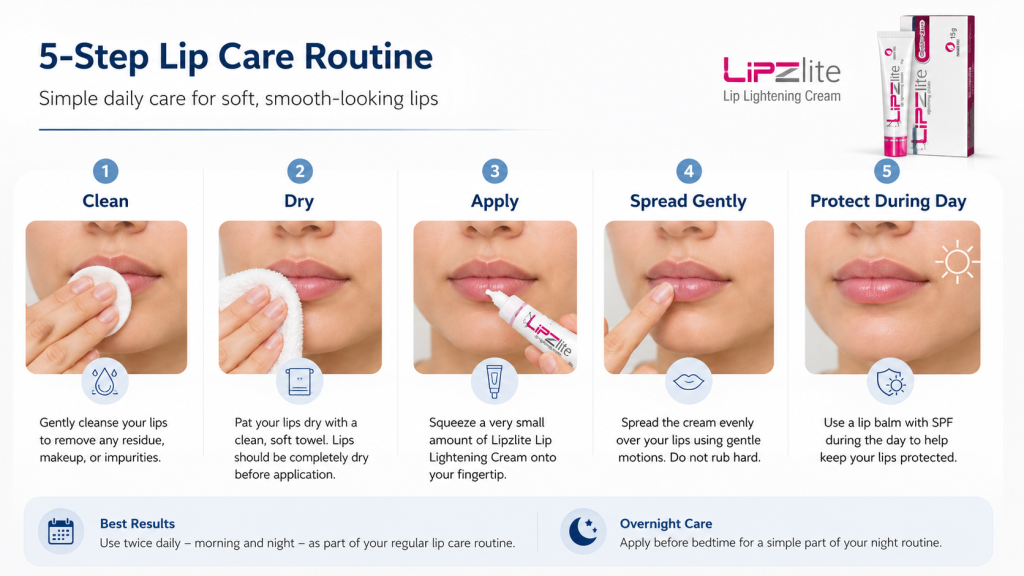
The basic application is simple.
Step 1: Clean Your Lips
Start with clean lips.
Remove lipstick, lip tint, balm, or other cosmetic residue. Use a gentle cleanser or water and avoid aggressive rubbing.
Pat your lips dry.
You do not need to scrub your lips before applying Lipzlite Cream.
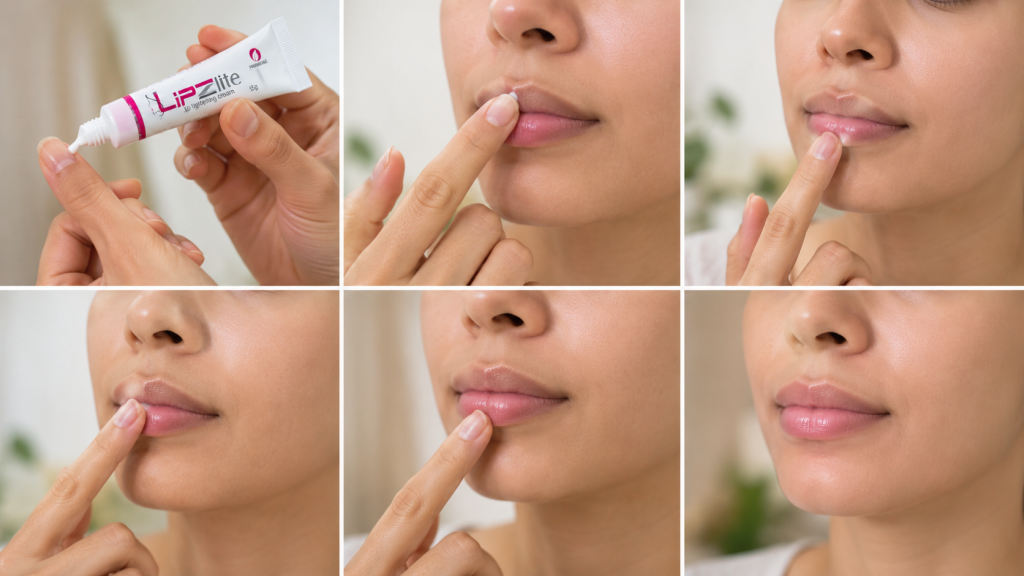
Step 2: Apply a Small Amount
Use a small amount of Lipzlite Lip Lightening Cream.
Spread a thin layer over the pigmented areas of your lips.
Avoid applying a thick coating. More cream does not automatically mean faster pigmentation improvement.
Step 3: Massage Gently
Use your fingertip to spread the cream evenly.
Massage with light pressure until the cream is distributed across the lip surface.
Do not scrub.
Do not use a rough towel or exfoliating tool after application.
Step 4: Build a Consistent Routine
Product listings commonly recommend applying Lipzlite twice daily, while other listings advise use as needed or at night.
For a simple routine, many users choose:
Follow the directions on your own product packaging if they differ from online listings.
Step 5: Protect Your Lips During the Day
Lip lightening care should not stop with the cream.
Sun exposure can contribute to pigmentation. A daytime lip product with SPF can help reduce ongoing UV exposure.
This is especially useful if you spend time outdoors, drive frequently, or work near windows.
How to Use Lipzlite Lip Lightening Cream With SPF
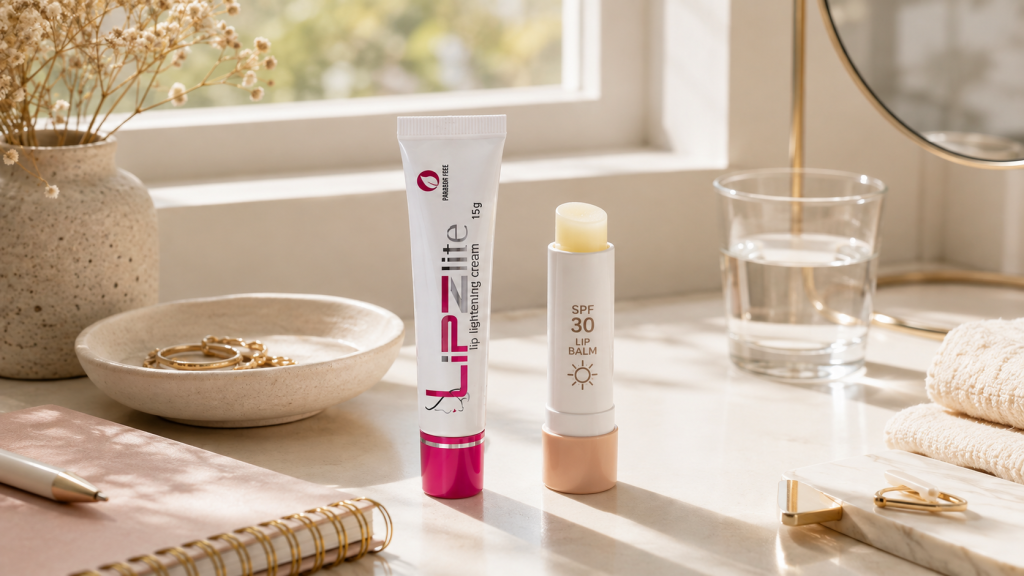
Lipzlite does not replace daytime sun protection.
A practical routine looks like this:
- Clean your lips.
- Apply Lipzlite according to the product directions.
- Let the cream settle.
- Apply a lip balm with SPF during daytime exposure.
- Reapply the SPF lip product according to its label, especially after eating or drinking.
The American Academy of Dermatology recommends sun protection as part of managing hyperpigmentation because UV exposure can contribute to ongoing pigment production.
If you are working on dark lips, ask yourself a simple question: are you treating pigmentation while continuing to expose the same area to the trigger?
Lipzlite Cream Ingredients Explained
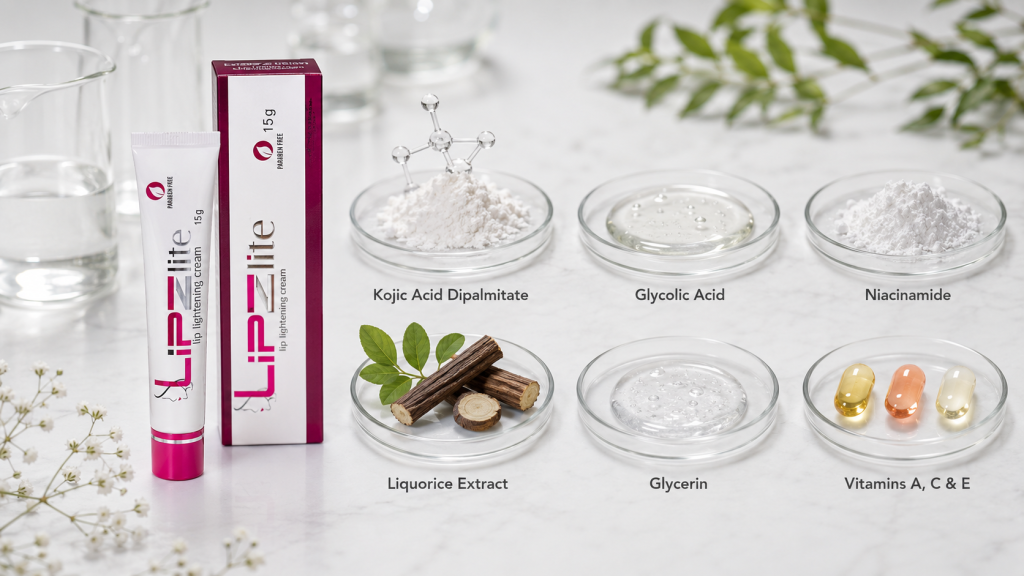
Understanding the ingredients can help you build a more informed routine.
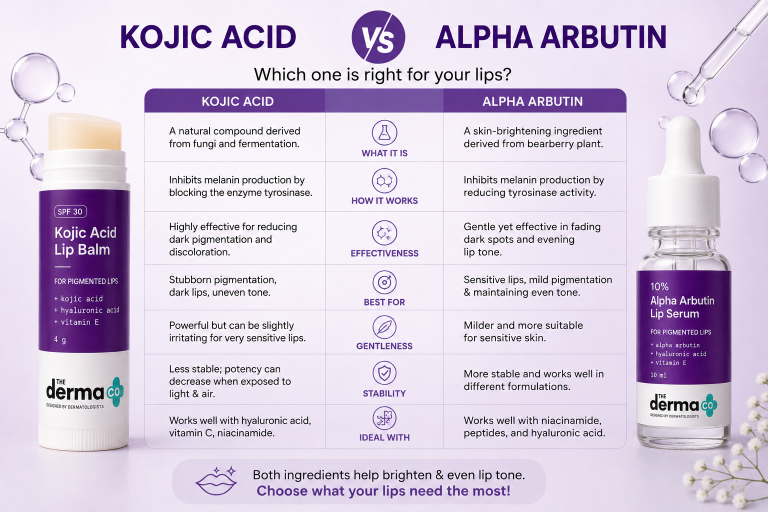
Kojic Acid Dipalmitate
Kojic Acid Dipalmitate is a derivative of kojic acid used in cosmetic pigmentation products.
Kojic acid is widely used in skincare aimed at reducing the appearance of hyperpigmentation because it can interfere with pathways involved in melanin production.
The Lipzlite formulation lists Kojic Acid Dipalmitate rather than plain kojic acid.
That distinction matters. They are related ingredients, but they are not identical.
Arbutin
Arbutin is another ingredient used in pigmentation-focused skincare.
It works by affecting the melanin-forming process, particularly through interaction with tyrosinase activity.
Arbutin appears in published ingredient lists for Lipzlite Lip Lightening Cream.
It is often paired with other pigment-focused ingredients because pigmentation can involve several biological steps.
Glycolic Acid
Glycolic acid is an alpha hydroxy acid.
It helps loosen connections between surface skin cells and can support exfoliation.
In a lip product, this is one reason you should avoid adding several other exfoliating products at the same time. Your lips have a different structure from thicker facial skin, so aggressive exfoliation can create irritation.
Liquorice Extract
Liquorice extract is commonly used in skincare formulas aimed at uneven pigmentation and skin tone.
It can complement other ingredients in a pigmentation-focused formula.
Niacinamide
Niacinamide is a form of vitamin B3 used in skincare.
It supports the skin barrier and is also used in products targeting uneven skin tone.
Vitamin A, C and E
The listed formulation also includes vitamin derivatives.
These ingredients are commonly used in skincare for antioxidant and skin-conditioning roles.
The exact effect depends on the form and concentration used in the product.
Lipzlite Ingredients at a Glance
Ingredient lists can change by manufacturer or market. Check the ingredient panel on your own tube before use.
How Often Should You Use Lipzlite Cream?
Consistency matters more than applying a large amount.
BeautybellBD lists twice-daily use for Lipzlite. The manufacturer and other retailers may provide different directions.
Use the instructions supplied with your product as the main reference.
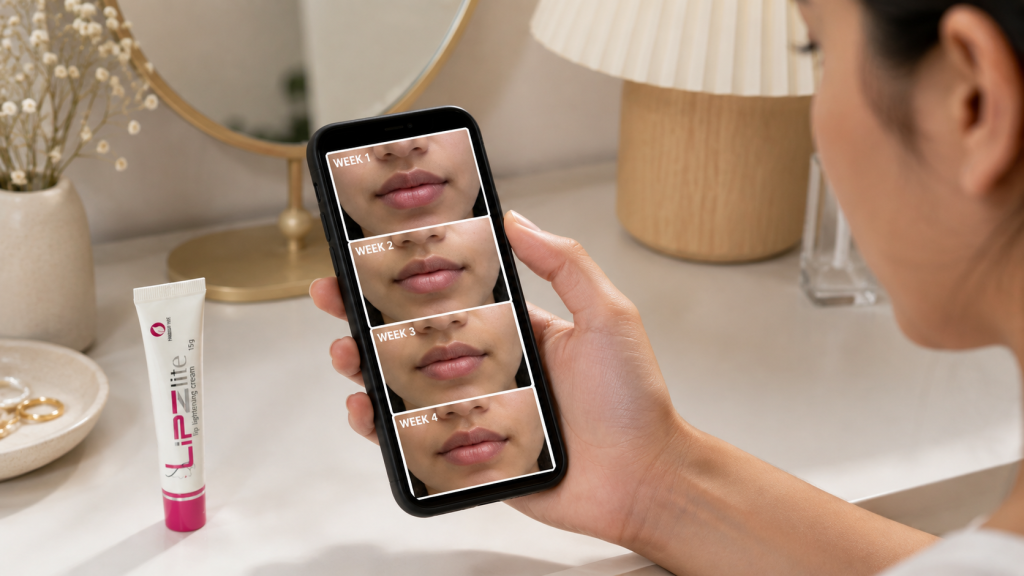
A simple tracking plan can help:
Do not judge progress from one day to the next.
Take a clear photo in the same lighting once a week. This gives you a better comparison than checking your lips repeatedly throughout the day.
How Long Does Lipzlite Take to Work?
There is no single timeline that applies to every person.
The cause of pigmentation, your natural lip colour, sun exposure, irritation, and consistency all affect how the area changes.
Some product sources and user discussions mention several weeks of regular use, but these reports should not be treated as a guaranteed result.
A better approach is to assess your lips over several weeks rather than expecting an immediate colour change.
Your goal should be gradual improvement in uneven pigmentation rather than a sudden change in natural lip colour.
A Simple Lipzlite Routine Chart
Use this chart as a quick reference:
This routine keeps the roles separate.
Lipzlite focuses on pigmentation care.
SPF helps limit daytime UV exposure.
Moisturising helps manage dryness.
What Can Make Dark Lips Worse?
Your skincare routine is only one part of the process.
Several habits can keep lips irritated or pigmented.
1. Smoking
Smoking is linked with lip and oral pigmentation in some people.
If smoking contributes to your lip darkening, a cream alone may not address the main trigger.
2. Frequent Lip Licking
Repeated licking can dry the lips and create a cycle of irritation.
The lips may feel dry, so you lick them. The moisture evaporates quickly, and the area can become even drier.
Breaking that cycle can support your overall routine.
3. Harsh Scrubbing
Scrubbing may feel like it is removing dark skin, but repeated friction can irritate the lips.
Irritation can lead to inflammation, which can contribute to post-inflammatory pigmentation.
4. Strong Cosmetic Products
Fragrance, flavouring agents, and other cosmetic ingredients can irritate some people.
If your lips became darker after starting a new lipstick, lip oil, balm, or tint, consider whether that product could be part of the problem.
5. Too Many Active Ingredients
Using several acids and pigmentation products at the same time can make your routine harder to manage.
Keep your routine simple.
Can You Use Lipzlite Every Day?
The product is marketed for regular use, and BeautybellBD lists morning and night application.
Daily use can make a routine easier to follow because you have a clear schedule.
The key is to follow the product label and watch how your lips respond.
If you add other active products, do not assume that combining them will speed up the process.
A simple routine often gives you a clearer way to identify what is helping and what may be causing irritation.
Can You Use Lipzlite at Night?
Night use is common in pigmentation routines because you can apply the cream after cleaning your lips and leave it in place.
A simple evening routine is:
- Remove lip products.
- Clean the lips gently.
- Pat dry.
- Apply a thin layer of Lipzlite Cream.
- Leave the product on according to its directions.
You do not need to scrub your lips before bed.
Can You Use Lipzlite With Lip Balm?
Yes, a lip moisturiser can fit into the same routine.
The order depends on the products you use.
For daytime, you can use Lipzlite according to its label and then apply a lip product with SPF when you need sun protection.
At night, use the Lipzlite product according to its directions and add a moisturising product only if your routine and product instructions support that combination.
If a product causes stinging, dryness, peeling, or another unwanted reaction, simplify your routine rather than adding more products.
Lipzlite vs. Other Lip Lightening Ingredients
Lip pigmentation products often contain several types of ingredients.
The American Academy of Dermatology and Cleveland Clinic both describe sun protection as an important part of managing hyperpigmentation.
This means your routine should not depend on one cream alone.
What If Your Lips Are Naturally Dark?
Lipzlite is not designed to change your genetic baseline.
Natural lip colour varies from person to person.
If your lips have always been darker, you may not see the same type of change as someone dealing with pigmentation caused by irritation or sun exposure.
The better question is:
Has your lip colour changed from your usual colour?
If yes, look for possible triggers.
If no, focus on maintaining healthy lips and protecting them from sun exposure.
Can Lipzlite Help With Dry Lips?
Product listings describe Lipzlite as a moisturising cream and include ingredients such as glycerin and petroleum jelly in published formulations.
Dryness can make lips look rough and uneven.
Keeping the lips moisturised can improve their surface appearance, but moisturisation and pigmentation treatment are different goals.
If your main problem is severe dryness rather than pigmentation, you may need a simple lip moisturiser as the main part of your routine.
How to Track Your Lipzlite Results
Do not rely only on memory.
Create a simple weekly record.
Your Weekly Lip Pigmentation Tracker
Take each photo in the same room, at a similar time, and under similar lighting.
This makes small changes easier to see.
Common Mistakes When Learning How to Use Lipzlite Lip Lightening Cream
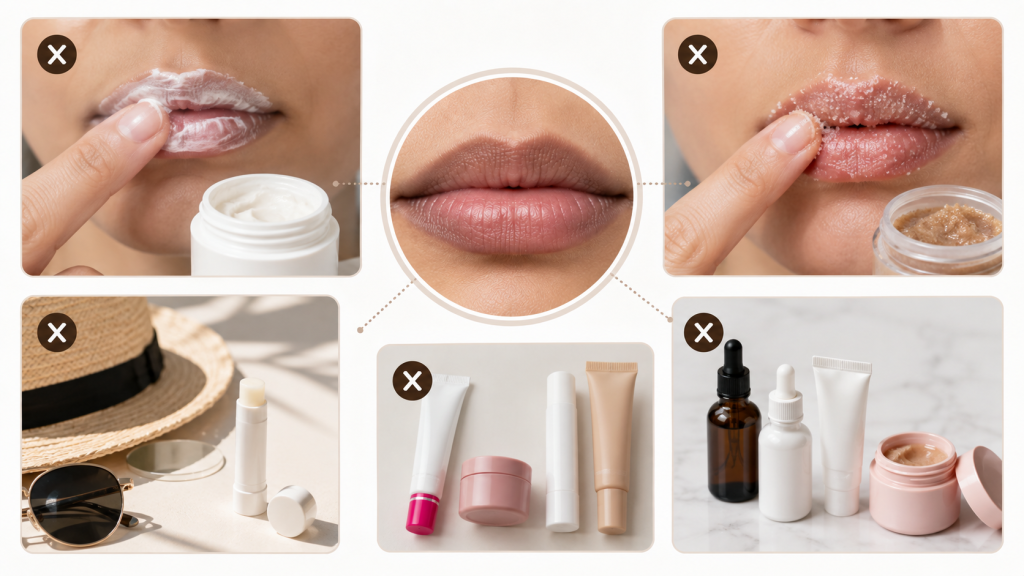
Mistake 1: Applying Too Much
A thick layer does not guarantee faster results.
Use a thin, even layer.
Mistake 2: Scrubbing Before Application
Aggressive exfoliation can irritate the lips.
Clean them gently instead.
Mistake 3: Ignoring Sun Exposure
UV exposure can contribute to pigmentation.
Use SPF lip protection during daytime exposure.
Mistake 4: Changing Products Every Few Days
Switching products constantly makes it hard to know what is working.
Give your routine enough time to assess changes.
Mistake 5: Expecting Your Natural Lip Colour to Change Completely
Pigmentation care focuses on excess or uneven colour.
It does not need to change your natural baseline.
Mistake 6: Using Several Strong Actives Together
Lipzlite already contains several active ingredients.
Adding more acids or exfoliating products can make your routine harder to manage.
Frequently Asked Questions About How to Use Lipzlite Lip Lightening Cream
How do you use Lipzlite Lip Lightening Cream?
Clean your lips, pat them dry, and apply a small amount of Lipzlite in a thin layer. Massage gently across the lips. Follow the directions on your product packaging for frequency.
Can I use Lipzlite twice a day?
BeautybellBD lists morning and night use. Other product sources provide different directions. Use the instructions on your own product packaging as your primary guide.
Should I use Lipzlite before or after lip balm?
For daytime, use Lipzlite according to its directions and use a lip product with SPF for sun protection. At night, keep the routine simple and follow the product directions.
Can Lipzlite remove dark lips permanently?
No cream can promise a permanent change in natural lip colour. Results depend on the cause of pigmentation, your routine, and ongoing exposure to triggers.
Does Lipzlite contain Kojic Acid Dipalmitate?
Published ingredient lists for Lipzlite include Kojic Acid Dipalmitate. The official Lipzlite product page also lists it as an ingredient.
Does Lipzlite contain Arbutin?
Published full ingredient lists for the 15g Lipzlite cream include Arbutin or Beta Arbutin. Check your own tube because formulations and packaging can vary by market.
Can I use Lipzlite on naturally dark lips?
You can follow the product directions for its intended use, but naturally darker lips may not change to a lighter baseline. The product is better understood as pigmentation-focused care rather than a way to alter natural lip colour.
How long should I use Lipzlite?
There is no universal treatment period. Track your results over several weeks and follow the product label.
Is SPF needed when using Lipzlite?
Daytime SPF lip protection can be useful because UV exposure can contribute to pigmentation. Lipzlite itself should not be treated as a sunscreen unless the product label specifically states an SPF.
A Practical 8-Week Lipzlite Plan
If you want a clear routine, use this structure.
Weeks 1-2: Establish the Routine
- Clean lips gently.
- Apply Lipzlite as directed.
- Add daytime SPF lip protection.
- Stop unnecessary scrubbing.
- Track dryness and irritation.
- Take a baseline photo.
Weeks 3-4: Compare Changes
Look at the photos rather than checking the mirror several times each day.
Ask:
- Does the colour look more even?
- Is the upper lip changing differently from the lower lip?
- Has dryness improved?
- Have you stayed consistent?
Weeks 5-6: Maintain Consistency
Keep the same basic routine.
Avoid adding several new active products just because progress feels slow.
Continue daytime SPF.
Weeks 7-8: Review
Compare your first photo with your latest photo.
Look for changes in:
- Uneven pigmentation
- Overall tone
- Dryness
- Surface texture
- Areas that remain darker
This gives you a clearer basis for deciding whether your routine is helping.
When the Cause Matters More Than the Cream
Pigmentation treatment works best when you understand the trigger.
For example:
If your lips became darker after frequent irritation from a cosmetic product, removing that product may matter as much as the pigmentation cream.
If sun exposure is a major factor, daytime lip SPF becomes part of the routine.
If smoking is contributing, continuing to smoke can work against your goal.
If the pigmentation appeared suddenly without an obvious reason, finding the cause becomes more important than adding another skincare product.
The Cleveland Clinic notes that hyperpigmentation can have many causes, including hormones, medications, skin injury, and other conditions.
How to Buy Lipzlite Lip Lightening Cream in Bangladesh
Lipzlite Lip Lightening Cream is listed by BeautybellBD as a 15g product imported from India.
You can check the current product details, availability, and listed price on the BeautybellBD product page:
Product page: Lipzlite Lip Lightening Cream at BeautybellBD
Before buying, compare the product name, size, ingredient panel, and packaging with the listing.
Final Routine Checklist
Use this checklist when you start:
- Clean your lips.
- Pat them dry.
- Apply a small amount of Lipzlite.
- Spread it evenly.
- Do not scrub the lips.
- Follow the label for frequency.
- Use SPF lip protection during daytime exposure.
- Keep the routine consistent.
- Track changes with weekly photos.
- Avoid adding several active products at once.
- Look for the cause of the pigmentation, not only the visible colour.
Learning how to use Lipzlite Lip Lightening Cream is mainly about consistency and routine control.
Use a thin layer.
Keep your lips protected during the day.
Avoid habits that create repeated irritation.
Track your progress over several weeks.
When you understand the cause of your lip pigmentation and keep your routine simple, you have a clearer way to judge whether Lipzlite Cream is helping your lips look more even.
Quick Reference Tables
Lipzlite Routine Chart
| Morning | Night |
| Clean lips | Clean lips |
| Apply Lipzlite if directed | Apply Lipzlite |
| Apply SPF lip balm | Leave cream on as directed |
| Reapply SPF as directed | Avoid rubbing or scrubbing |
Ingredient Function Chart
| Ingredient | Role |
| Kojic Acid Dipalmitate | Pigmentation-focused ingredient |
| Arbutin | Supports pigmentation care |
| Glycolic Acid | Exfoliating action |
| Liquorice Extract | Skin-tone care |
| Niacinamide | Skin-conditioning and tone support |
| Vitamin C | Antioxidant support |
| Vitamin E | Skin-conditioning support |
| Glycerin | Helps retain moisture |