
Baby Skincare Routine: A Complete Guide to Safe Baby Skin Care from Newborn to Toddler
A baby skincare routine should be simple, gentle and appropriate for the child’s age. Babies do not need multiple skincare products to maintain healthy skin. Instead, parents should focus on gentle cleaning, safe bathing, diaper hygiene, sun protection and suitable moisturization when needed.
A newborn’s skin requires particularly minimal care, while infants and toddlers may need additional products depending on their skin condition, activities and daily environment.
Understanding these differences helps parents avoid unnecessary products and make better skincare decisions.
What Is the Best Baby Skincare Routine?
A basic baby skincare routine includes:
- Gently clean the face and body when needed.
- Use lukewarm water for bathing.
- Avoid excessive bathing and harsh cleansers.
- Dry the neck, armpits, groin and other skin folds carefully.
- Change wet or dirty diapers promptly.
- Use a suitable moisturizer if the skin is dry and a healthcare professional recommends or considers it appropriate.
- Protect babies from direct sunlight.
- Choose age-appropriate products with simple formulations.
Newborns do not automatically need daily lotion, baby powder, perfume or multiple cleansing products.
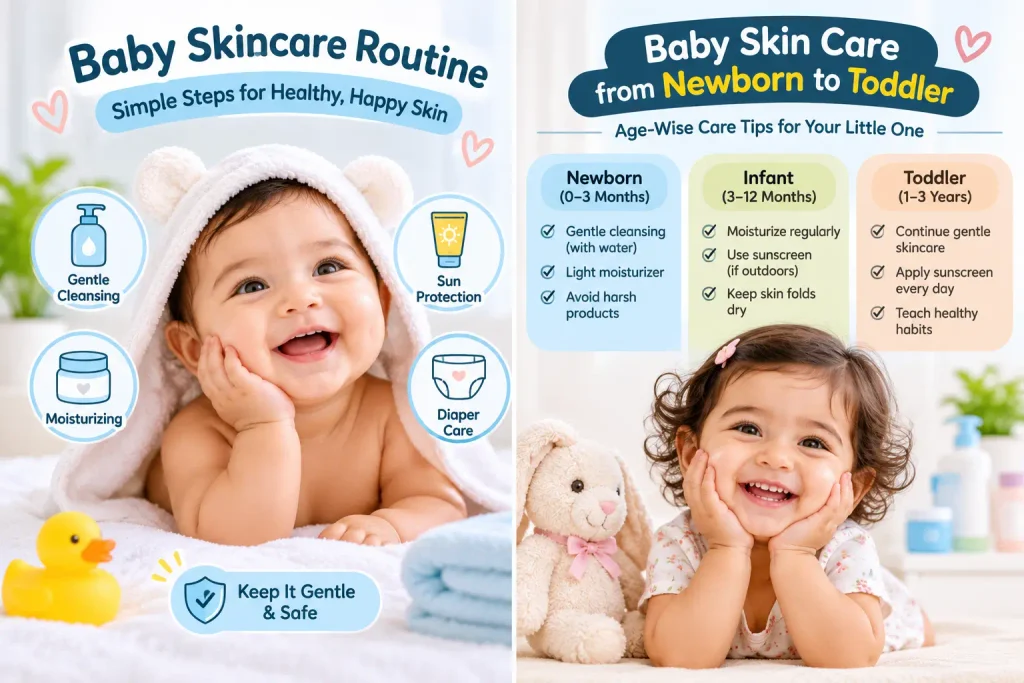
1. Understanding Why Baby Skin Needs Special Care
Baby skin is different from adult skin. Its protective barrier is still developing, particularly during the newborn period.
This means babies may be more vulnerable to irritation from harsh cleansers, excessive washing, friction and unsuitable skincare products.
Parents should understand three important things.
First, newborn skin needs minimal intervention.
A healthy newborn does not automatically need a complete skincare collection. Water and gentle cleaning are often sufficient during the earliest weeks.
Second, product selection matters.
Products containing strong fragrances, harsh cleansers or unnecessary additives may irritate delicate skin. Parents should check the ingredient list and intended age before purchasing.
Third, more products do not mean better skincare.
Using baby wash, lotion, oil, powder, cream and fragrance together does not necessarily improve skin health.
The objective should be to maintain cleanliness and comfort without unnecessarily disturbing the skin barrier.
2. Baby Skincare Routine by Age
A baby’s skincare requirements change throughout early childhood. A routine that works for a toddler may not be appropriate for a newborn.
Newborn Skincare: 0–1 Month
The newborn stage requires the simplest skincare routine.
The World Health Organization recommends delaying the first bath of a healthy, full-term newborn for at least 24 hours after birth. It also recommends keeping the umbilical cord clean and dry. World Health Organization+1
Recommended practices:
- Avoid unnecessary bathing during the first days.
- Clean the baby’s face and diaper area gently.
- Use plain water for routine cleaning.
- Keep the umbilical cord stump clean and dry.
- Avoid applying products directly to the cord stump.
- Do not routinely apply lotions or oils without a specific need.
- Keep the baby comfortable and appropriately dressed.
A healthy newborn does not need an elaborate skincare routine.
Infant Skincare: 1–6 Months
As babies grow, parents can establish a simple bathing and hygiene routine.
Useful practices include:
- Gentle cleaning with lukewarm water.
- A suitable baby cleanser when needed.
- Regular diaper changes.
- Careful drying of skin folds.
- Monitoring for dryness or irritation.
- Appropriate moisturization when needed.
When selecting baby skincare products, check the age recommendation and complete ingredient list.
Babies younger than six months should generally be kept out of direct sunlight using shade, hats and protective clothing.
Infant Skincare: 6–12 Months
Babies become more active during this period. Crawling, feeding, sweating and increased contact with surfaces can introduce additional hygiene needs.
A practical routine may include:
- Cleaning the face after meals.
- Washing hands when dirty.
- Cleaning the diaper area during every change.
- Bathing as needed.
- Using a suitable moisturizer if dryness occurs.
- Keeping skin folds clean and dry.
At this stage, parents should also pay attention to products used around the mouth and hands, because babies frequently touch their faces and put their hands in their mouths.
Toddler Skincare: 1–3 Years
Toddlers are more physically active and frequently play outdoors.
Their skincare routine may include:
- Regular bathing based on activity and hygiene needs.
- Gentle body cleansing.
- Age-appropriate shampoo.
- Moisturizing dry areas when necessary.
- Sun-protective clothing and shade.
- Cleaning hands and face after outdoor activities.
Parents should avoid using adult facial cleansers, exfoliating products, strong perfumes or adult skincare treatments on toddlers.
3. How to Build a Simple Daily Baby Skincare Routine
A consistent routine helps parents manage everyday hygiene without using unnecessary products.
Morning Routine
Start the day with gentle cleaning.
- Clean the baby’s face using a soft, clean cloth and water.
- Clean around the neck and other skin folds.
- Check for redness or dryness.
- Change into clean, comfortable clothing.
- Apply an appropriate moisturizer only if needed.
Avoid rubbing the baby’s skin aggressively.
Bath-Time Routine
Bathing should be gentle and comfortable.
- Prepare clean towels, clothing and bathing supplies.
- Check that the room is comfortably warm.
- Use lukewarm water.
- Support the baby’s head and neck throughout bathing.
- Clean gently, avoiding unnecessary soap.
- Rinse away cleanser.
- Remove the baby from the bath and pat the skin dry.
- Pay particular attention to skin folds.
Never leave a baby unattended in water, even briefly.
Evening Routine
An evening routine can focus on comfort and hygiene.
- Clean the diaper area.
- Change into clean clothing.
- Check for areas of dryness or irritation.
- Keep the sleeping environment comfortable.
- Avoid unnecessary fragranced products.
A consistent routine is more useful than applying many products.
4. How Often Should You Bathe Your Baby?
Babies generally do not require daily full-body bathing.
The American Academy of Dermatology suggests bathing babies two to three times per week, provided the diaper area is cleaned during diaper changes. The NHS also explains that newborns do not need daily baths. American Academy of Dermatology+1
However, bathing frequency can depend on age, activity, climate and individual needs.
| Age | General bathing approach |
|---|---|
| Newborn | Gentle sponge cleaning before the cord stump heals |
| 1–6 months | Usually 2–3 baths weekly |
| 6–12 months | Based on hygiene and activity |
| 1–3 years | Based on activity, dirt and individual needs |
Why Excessive Bathing Can Be a Problem
Frequent bathing, particularly with harsh cleansers, can contribute to dryness and irritation.
Parents should avoid:
- Very hot water.
- Long baths.
- Strongly fragranced soaps.
- Excessive scrubbing.
- Unnecessary bubble baths.
For newborns, plain water is generally sufficient for early routine cleansing.
5. How to Choose Safe Baby Skincare Products
Choosing baby skincare products can be confusing because the market offers many different formulas and product claims.
Parents should focus on practical product characteristics rather than marketing language.
Choose Age-Appropriate Formulations
Always check whether the product is intended for newborns, infants or older children.
Do not assume that a product marketed as a baby product is automatically appropriate for every age.
Consider Fragrance-Free Options
Fragrance-free products can be a sensible starting point, particularly when caring for sensitive skin.
However, fragrance-free does not automatically mean that a product will suit every baby.
Check the Ingredients
Read the full ingredient list rather than relying only on front-label claims.
Look for clear information about:
- Cleansing ingredients.
- Moisturizing ingredients.
- Fragrance.
- Preservatives.
- Intended age.
- Directions for use.
Avoid Unnecessary Products
A newborn does not need a separate cleanser, shampoo, body lotion, massage oil and powder simply because these products are available.
Start with the essentials and introduce additional products only when there is a genuine need.
Follow Product Directions
Use products according to the manufacturer’s instructions. Do not apply products to broken, infected or irritated skin without professional advice.
6. Baby Lotion vs Baby Cream vs Baby Moisturizer
Parents frequently use these terms interchangeably, but different formulations can have different textures and purposes.
| Product type | General characteristics | When it may be considered |
|---|---|---|
| Baby lotion | Usually lighter in texture | For appropriate skin moisturization |
| Baby cream | Often thicker and richer | For selected dry areas |
| Baby moisturizer | General term covering different formulations | When additional moisture is needed |
| Baby wash | Cleansing product | Bath-time hygiene |
| Baby shampoo | Hair and scalp cleanser | When hair cleansing is needed |
The right choice depends on the baby’s age, skin condition, ingredients and product directions.
Important: Routine moisturizer use is not automatically necessary for every healthy newborn. WHO does not recommend routine topical emollient application to prevent skin conditions in healthy, full-term newborns because evidence of benefit is insufficient. NCBI+1
For babies with persistent dryness or diagnosed skin conditions, ask a pediatrician about an appropriate product.
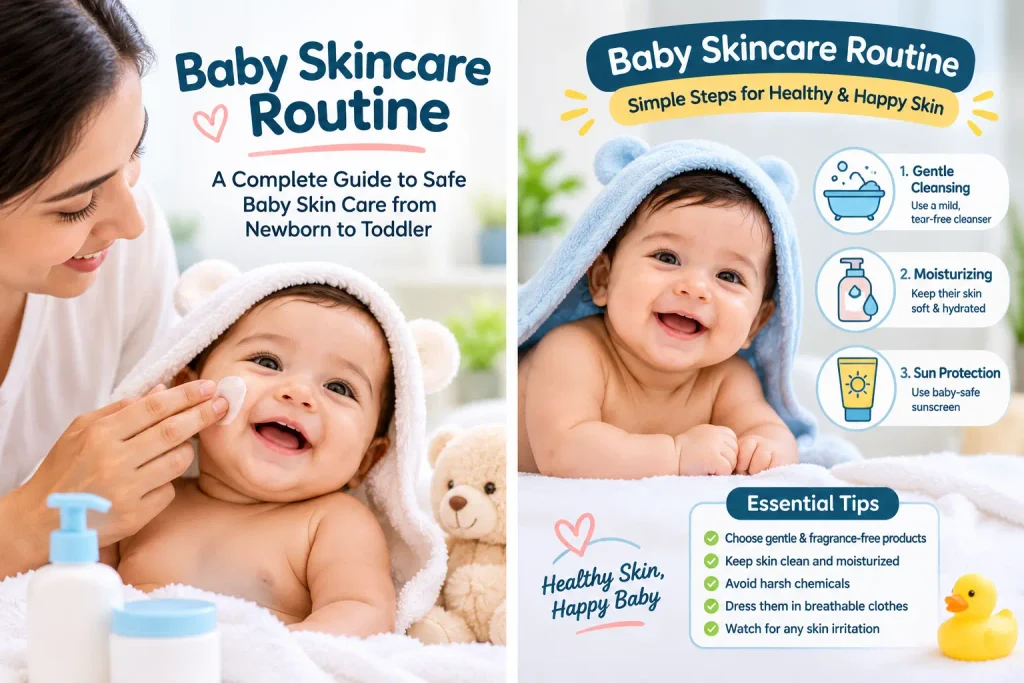
7. Baby Skincare in Bangladesh’s Hot and Humid Climate
Bangladesh has a generally warm and humid climate, which makes everyday hygiene particularly important.
Sweating and trapped moisture can cause discomfort, especially in areas where skin touches skin.
Keep Skin Folds Clean and Dry
Pay attention to:
- Neck folds.
- Underarms.
- Groin.
- Behind the ears.
- Areas around the thighs.
After cleaning, gently pat these areas dry.
Choose Comfortable Clothing
Lightweight, breathable clothing can help babies remain comfortable in warm weather.
Avoid unnecessary layering when temperatures are high.
Do Not Overuse Baby Powder
Baby powder is not an essential part of a skincare routine.
Loose powders can be inhaled, so avoid sprinkling powder near a baby’s face or using it in a way that creates airborne dust. The Indian Academy of Pediatrics also advises against routine powder use in newborns. Indian Pediatrics+1
Be Careful With Outdoor Sun Exposure
Keep young babies in the shade and use protective clothing.
For babies younger than six months, avoid direct sunlight. The AAD recommends shade and protective clothing as the primary protection, with limited sunscreen use on uncovered skin only when shade and clothing are unavailable. American Academy of Dermatology+1
For older babies and toddlers, use an age-appropriate broad-spectrum sunscreen according to its label and professional guidance.
8. How to Prevent Common Baby Skin Problems
Some skin concerns are common during infancy. Parents should understand basic hygiene practices and know when professional care is necessary.
Diaper Rash
Diaper rash is commonly associated with prolonged exposure to moisture, urine, stool and friction.
Prevention tips:
- Change wet or dirty diapers promptly.
- Clean the area gently.
- Dry the skin before putting on another diaper.
- Avoid unnecessary fragranced wipes.
- Allow the diaper area to remain uncovered briefly when practical.
- Consider an appropriate barrier cream when needed.
The AAD recommends gentle diaper-area care and zinc oxide diaper cream when diaper rash develops. American Academy of Dermatology+1
If the rash persists, worsens or appears infected, consult a healthcare professional.
Dry Baby Skin
Dryness may occur because of environmental conditions, frequent bathing or individual skin sensitivity.
Helpful practices include:
- Avoiding hot water.
- Reducing unnecessary bathing.
- Using gentle cleansing products.
- Seeking advice about a suitable moisturizer.
Do not automatically assume that all dry skin requires the same product.
Cradle Cap
Cradle cap can appear as yellowish or white scales on a baby’s scalp.
Parents should avoid forcefully scratching or peeling the scales.
Gentle scalp cleaning and appropriate care may help. Consult a pediatrician if the condition persists, becomes inflamed or causes concern.
Baby Acne
Small spots may appear on a newborn’s face during the early weeks.
Parents should avoid using adult acne products, scrubs or medicated treatments.
If the rash is unusual, severe or accompanied by other symptoms, seek medical advice.
9. Common Baby Skincare Mistakes Parents Should Avoid
Some skincare practices are unnecessary or may irritate delicate baby skin.
| Mistake | Better approach |
|---|---|
| Bathing too frequently | Bathe according to age and hygiene needs |
| Using adult skincare products | Choose age-appropriate products |
| Applying too many products | Keep the routine simple |
| Using strong fragrances | Consider fragrance-free alternatives |
| Applying powder near the face | Avoid airborne powder |
| Scrubbing dry skin | Clean and pat gently |
| Ignoring product age limits | Read the label |
| Applying products to the cord stump | Keep it clean and dry |
| Using sunscreen on newborns routinely | Prioritize shade and clothing |
| Treating persistent rashes at home | Seek professional advice |
10. When Should Parents Consult a Doctor?
Not every skin change requires treatment, but certain symptoms should never be ignored.
Consult a pediatrician if your baby experiences:
- A rash that spreads rapidly.
- Blisters or open sores.
- Swelling or pus.
- Persistent or worsening diaper rash.
- Severe itching or discomfort.
- Skin that appears infected.
- A rash accompanied by fever.
- Unusual changes in the skin around the umbilical cord.
A baby younger than three months with a temperature of 38°C or higher needs urgent medical assessment.
Do not attempt to treat persistent or severe skin conditions using cosmetic baby products alone.
11. Choosing the Right Baby Skincare Products for Everyday Care
Once parents understand their baby’s needs, they can consider whether any specific products are necessary.
BeautyBellBD’s Mom & Baby Care collection includes several product types relevant to everyday baby hygiene and moisturization.
The selection process should begin with the baby’s age, skin condition and actual requirements.
Baby Wash and Shampoo
A gentle cleansing product may be useful for appropriate bathing routines as a baby grows.
For example:
Cetaphil Baby Wash & Shampoo with Organic Calendula (400ml)
This product is listed in BeautyBellBD’s Mom & Baby Care category. Its product description identifies calendula, aloe vera and vitamins E and B5 among its ingredients. BeautyBellBD
Explore: Cetaphil Baby Wash & Shampoo
Baby Moisturizer
For babies who need additional moisturization, parents can compare suitable formulations.
Cetaphil Baby Daily Lotion with Organic Calendula (400ml)
The website lists this lotion with calendula, sweet almond oil, sunflower seed oil and vitamin E. Check the current label and age suitability before use. BeautyBellBD
Explore: Cetaphil Baby Daily Lotion
Baby Cream
A cream may be considered when a richer formulation is appropriate for a baby’s skin needs.
Cetaphil Baby Soothing Moisturising Cream (100g)
BeautyBellBD lists this product with ingredients including glycerin, sunflower seed oil, vitamin E and panthenol. Its current product information should be checked before purchasing. BeautyBellBD
Explore: Cetaphil Baby Moisturising Cream
Parents should not purchase all three products automatically. A cleanser and moisturizer are different product categories, and not every baby needs both.
12. Final Baby Skincare Checklist
Use this simple checklist to review your baby’s daily care.
- Keep the routine gentle.
- Avoid unnecessary bathing.
- Clean the diaper area during diaper changes.
- Dry skin folds carefully.
- Choose age-appropriate products.
- Check ingredients before purchasing.
- Avoid unnecessary fragrances and powders.
- Protect babies from direct sunlight.
- Monitor unusual skin changes.
- Consult a pediatrician when necessary.
Conclusion
A good baby skincare routine is not about using the largest number of products. It is about understanding your baby’s age, maintaining everyday hygiene and choosing appropriate products only when necessary.
Newborns generally need minimal skincare, while older infants and toddlers may benefit from a more established bathing and moisturizing routine.
Parents in Bangladesh should also consider the warm and humid climate when managing sweat, clothing and skin-fold hygiene.
If you are looking for baby-care essentials, explore the Mom & Baby Care collection at BeautyBellBD and compare products based on age suitability, ingredients and intended use.
FAQs
What is the best skincare routine for a newborn baby?
A simple routine is best. Gently clean the baby’s face and diaper area, maintain clean and dry skin folds, keep the umbilical cord stump dry and avoid unnecessary skincare products.
When should I start using baby lotion?
Healthy newborns do not automatically need routine lotion. If dryness occurs, discuss an appropriate moisturizer with your pediatrician and check the product’s age recommendations.
How often should I bathe my newborn?
Two to three baths per week are generally sufficient once bathing begins. Keep the umbilical cord stump clean and dry, and use sponge bathing until it has separated and healed.
Is baby moisturizer necessary every day?
No. Not every baby needs daily moisturizer. Use an appropriate product when there is a genuine need for additional moisture.
What should I look for in baby skincare products?
Check age suitability, ingredients, fragrance information, cleansing formulation and manufacturer directions. Choose products based on your baby’s needs rather than marketing claims.
Is baby powder necessary?
No. Baby powder is not an essential skincare product. Loose powder can be inhaled, so it is safer to avoid routine use.
Can I use regular adult lotion on my baby?
It is better to choose an age-appropriate baby product. Adult lotions may contain fragrances or ingredients that are unsuitable for a baby’s delicate skin.
How do I protect my baby’s skin in hot weather?
Keep skin folds clean and dry, use lightweight clothing, avoid overheating and protect the baby from direct sunlight.
What is the difference between baby lotion and baby cream?
Baby lotions are generally lighter, while creams are often thicker. The appropriate formulation depends on the baby’s skin needs and the manufacturer’s directions.
How can I prevent diaper rash?
Change diapers promptly, clean the area gently, dry the skin carefully and use an appropriate barrier cream when needed.
Can I use sunscreen on a newborn?
Babies younger than six months should primarily be protected using shade and clothing. Sunscreen should not be part of a routine newborn skincare regimen. Follow pediatric guidance if limited exposure cannot be avoided.
When should I take my baby to a doctor for a skin rash?
Seek medical advice for persistent, worsening or unusual rashes, blisters, swelling, pus, fever or signs of infection. A fever of 38°C or higher in a baby younger than three months needs urgent medical assessment.
Product Recommendations
Product selection based on currently indexed BeautyBellBD product listings
The following products are relevant to the article’s educational sections. These are examples for product discovery, not a recommendation to use every item on a newborn.
Cetaphil Baby Wash & Shampoo Calendula (400ml)
1. Cetaphil Baby Wash & Shampoo with Organic Calendula (400ml)
May suit: Parents looking for a combined baby cleansing product, subject to age-label verification.
Purpose: Bath-time cleansing.
Why relevant: Supports the section about selecting a gentle wash-and-shampoo product.View product
Buy Baby Daily Lotion with Organic Calendula| Cetaphil India
2. Cetaphil Baby Daily Lotion with Organic Calendula (400ml)
May suit: Parents considering a lotion for a baby who needs moisturization.
Purpose: Moisturizing care.
Why relevant: Connects to the discussion about lotion selection and skin dryness.View product
Cetaphil Baby Soothing Moisturizing Cream for Sensitive Skin – 100g price in Bangladesh | Arogga
3. Cetaphil Baby Soothing Moisturising Cream (100g)
May suit: Parents comparing a cream formulation for dry skin.
Purpose: Moisturizing care.
Why relevant: Provides a comparison with lighter lotion formulations.View product
Aveeno Baby Daily Moisture Lotion, 227g (Exp 05/28)
4. Aveeno Baby Daily Moisture Lotion (227g)
May suit: Parents comparing a fragrance-free baby lotion.
Purpose: Daily moisturization when needed.
Why relevant: Offers another formulation to compare when discussing product selection.Find product in Mom & Baby Care
product-details-shelf-management
5. Babi Mild Bioganik Organic Baby Cream (50g)
May suit: Parents comparing a smaller cream-format product.
Purpose: Additional moisturizer comparison.
Why relevant: Introduces a different brand and product format.View product

 English
 Bengali