
Best Acne Serum in Bangladesh: Top Picks for Pimples & Acne Marks
Finding the best acne serum in Bangladesh is not simply about choosing the product with the highest active-ingredient percentage. The right serum depends on what you are actually trying to manage: active pimples, clogged pores, excess oil, blackheads, post-acne marks, or a combination of concerns.
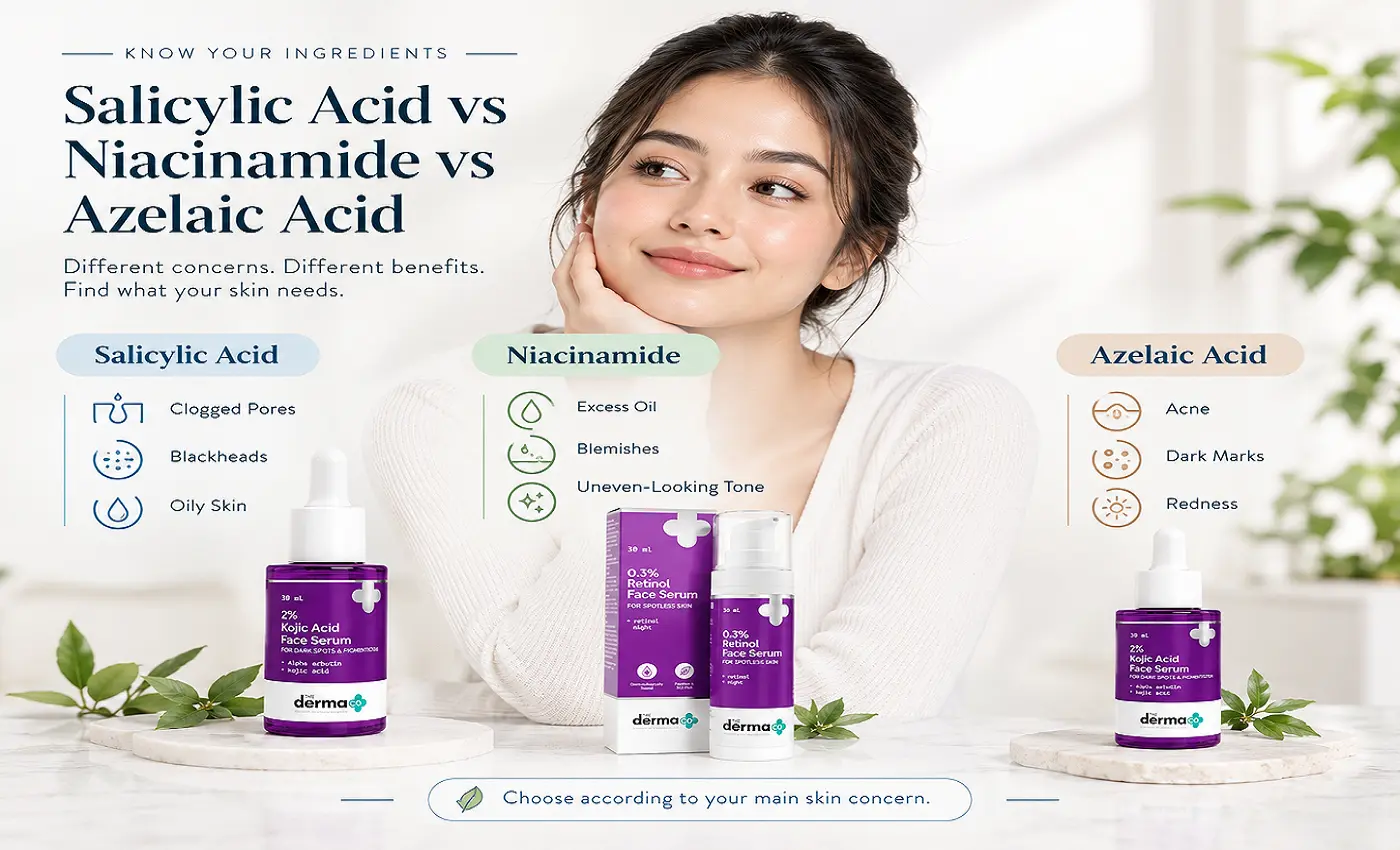
For example, salicylic acid is commonly used for oily and congested skin, while niacinamide can fit routines focused on oil control and blemish-prone skin. Azelaic acid can be particularly relevant when breakouts and post-acne dark marks are both concerns.
This guide explains how to choose an acne serum based on your skin type and concern, what ingredients to look for, how to introduce an active safely, and which acne-focused serum options are currently available from BeautyBellBD.
Quick Answer: Which Acne Serum Should You Choose?
The best acne serum depends on your primary skin concern.
| Your main concern | Ingredient/formula to consider |
| Blackheads and clogged pores | Salicylic acid |
| Oily, blemish-prone skin | Salicylic acid or niacinamide |
| Pimples + excess oil | Acne-focused or salicylic-acid formula |
| Acne marks and uneven tone | Niacinamide or azelaic acid |
| Acne + dark marks + redness | Azelaic acid |
| Multiple concerns | Carefully formulated multi-active serum |
| Easily irritated skin | Start with a simpler, soothing routine |
Salicylic acid is particularly useful for unclogging pores and treating blackheads and whiteheads, while azelaic acid can help with acne and the dark spots that may remain after breakouts, according to the American Academy of Dermatology.
What Makes a Good Acne Serum?
A good acne serum should match the specific problem you are trying to address.
Instead of looking only at the product label, consider:
- Your skin type
- Your type of breakout
- Whether you have active acne or mainly leftover marks
- The active ingredients
- The strength of those ingredients
- How sensitive your skin is
- What other products you already use
This matters because acne is not one uniform condition. Someone with frequent blackheads may benefit from a pore-focused ingredient such as salicylic acid, while someone primarily concerned with post-acne discoloration may be looking for a different type of formula. If you’re starting from scratch, it also helps to build this into a full acne-prone skin routine rather than relying on one product alone.
Which Ingredients Are Best for Acne?
Salicylic Acid
Salicylic acid is a beta hydroxy acid, or BHA, commonly used in acne-prone skincare. It is particularly relevant for blackheads, whiteheads, clogged pores, oily skin, and congested-looking skin.
Because it is oil-soluble, salicylic acid is useful for pore-focused exfoliation. The American Academy of Dermatology identifies it as an acne ingredient that unclogs pores and notes that it works especially well for blackheads and whiteheads.
A BeautyBellBD example is Minimalist 2% Salicylic Acid Face Serum, which is positioned for oily, combination and blemish-prone skin and is available in 10ml and 30ml sizes.
Niacinamide
Niacinamide, also known as vitamin B3, is frequently included in routines for oily and blemish-prone skin. It can be useful when your concerns include excess shine, uneven-looking skin tone, visible pores, blemishes, post-acne marks, or supporting the skin barrier.
BeautyBellBD currently carries several niacinamide-focused products, including The Ordinary Niacinamide 10% + Zinc 1% — see our full breakdown in Best Niacinamide Serum in Bangladesh for Oily Skin, Acne & Dark Spots.
However, niacinamide should not automatically be considered a replacement for acne-specific treatment. Its role depends on the overall formula and the problem you are trying to address.
Azelaic Acid
Azelaic acid is especially interesting for people who have both acne and post-acne discoloration. The American Academy of Dermatology notes that azelaic acid can fight acne while also helping fade dark spots that appear after an acne lesion clears.
BeautyBellBD currently carries azelaic-acid options including Cos De BAHA Azelaic Acid 10 Serum and ANUA Azelaic Acid 10 Hyaluron Redness Soothing Serum. For a deeper ingredient breakdown, see our azelaic acid for acne guide.
AHA + BHA Formulas
Some products combine more than one exfoliating active. For example, BeautyBellBD’s Garnier AHA+BHA Charcoal Anti-Blemish Serum combines AHA, BHA and niacinamide and is positioned around blemishes, residual marks, visible pores and uneven texture.
These formulas may be attractive if you have several concerns, but more active ingredients do not automatically mean better results. If your skin is sensitive, introduce exfoliating formulas gradually.
How to Choose an Acne Serum for Your Skin
If You Have Oily Skin and Clogged Pores
Look for a lightweight serum containing salicylic acid. This is particularly relevant when your main problems are blackheads, whiteheads, congested pores, excess oil, or rough texture. A 2% salicylic acid serum can be a targeted option, but beginners should introduce it gradually rather than immediately using it every night.
If Your Main Problem Is Pimples and Breakouts
Consider an acne-focused formula rather than choosing a serum simply because it is popular. For example, The Derma Co Sali-Cinamide Anti-Acne Serum combines salicylic acid and niacinamide and is positioned for pimples, excess oil, clogged pores and acne marks. Another BeautyBellBD option is Fixderma Acne Defence Face Serum, which is marketed for acne-prone skin and focuses on breakouts and excess oil.
If Your Main Concern Is Acne Marks
First determine whether you mean brown/dark marks left after pimples, red marks, textural acne scars, or active acne that is still present. A serum may help with the appearance of discoloration, but true indented or raised acne scars are different from flat post-acne marks and may require professional treatment. For pigmentation-related concerns, azelaic acid and niacinamide are two ingredients worth researching.
If You Have Acne Plus Dark Marks
Azelaic acid may be a particularly relevant ingredient to investigate because it addresses both acne and post-inflammatory dark spots. For example, Cos De BAHA Azelaic Acid 10 Serum contains 10% azelaic acid and niacinamide, while ANUA Azelaic Acid 10 Hyaluron Redness Soothing Serum combines azelaic acid with hydrating and soothing ingredients.
If Your Skin Is Sensitive
Do not assume that a stronger acne serum is better. Start with one active product, lower frequency, gentle cleansing, moisturizer, and daily sunscreen. Avoid introducing several acids or active products at the same time. The American Academy of Dermatology also warns that frequently switching acne treatments can irritate skin and potentially worsen breakouts.
Best Acne Serum Options Available at BeautyBellBD
The right choice depends on your concern rather than a universal ranking.
| Product | Best matched concern | Key positioning |
| Minimalist 2% Salicylic Acid Face Serum | Clogged pores, blackheads, oily skin | Focused BHA formula |
| The Derma Co Sali-Cinamide Anti-Acne Serum | Pimples + oil + marks | Salicylic acid + niacinamide |
| Fixderma Acne Defence Face Serum | Acne-prone/oily skin | Acne-focused daily serum |
| Cos De BAHA Azelaic Acid 10 Serum | Acne + dark marks | Azelaic acid + niacinamide |
| ANUA Azelaic Acid 10 Hyaluron Serum | Acne marks + redness | Azelaic acid + hydrating/soothing ingredients |
| Garnier AHA+BHA Charcoal Serum | Blemishes + texture + marks | Multi-active exfoliating formula |
These products represent different approaches rather than six identical “best” products. Current availability and pricing should be checked on the product pages before publishing, since stock, variants and promotions can change.
Not sure which serum fits your skin concern? Explore BeautyBellBD’s full face-serum collection to compare formulas and find an option that matches your routine.

Salicylic Acid vs Niacinamide vs Azelaic Acid
| Ingredient | Best suited to | Main role |
| Salicylic acid | Oily, congested skin | Pore-focused exfoliation |
| Niacinamide | Oily/blemish-prone skin | Oil-control and skin-conditioning support |
| Azelaic acid | Acne + dark marks | Acne and discoloration-focused care |
| AHA + BHA | Multiple texture/blemish concerns | Surface + pore-focused exfoliation |
Which one should a beginner choose?
If your main concern is blackheads and clogged pores, a salicylic-acid serum is the most logical place to start. If your main concern is oiliness, visible pores and blemish-prone skin, niacinamide may fit better. If you have acne plus dark marks, azelaic acid is worth considering. If you have multiple concerns, resist the temptation to use all three simultaneously — our salicylic acid vs adapalene vs benzoyl peroxide comparison walks through how these actives differ in strength and use case.
How to Use an Acne Serum
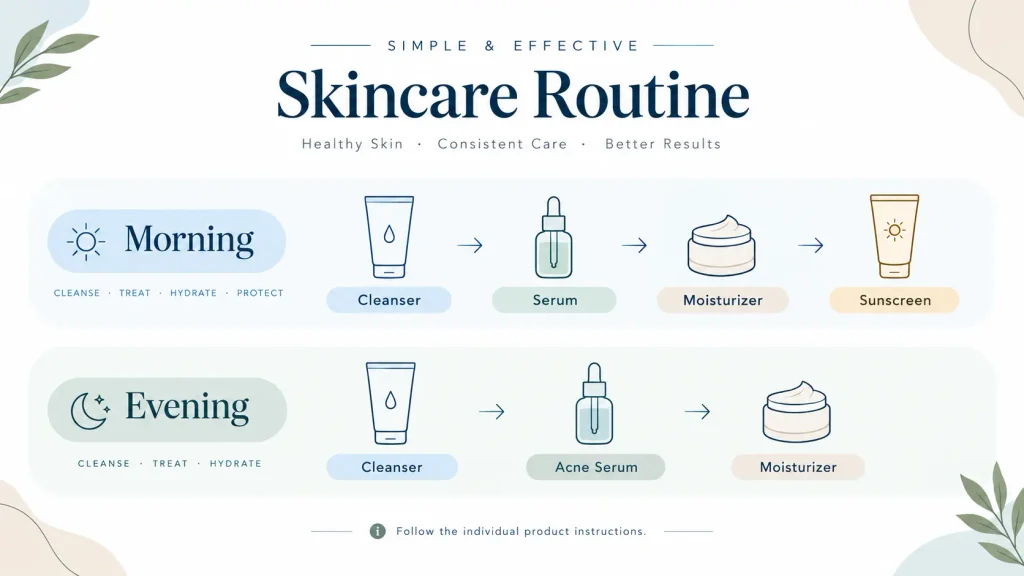
Morning: Gentle cleanser → Serum, if appropriate for daytime use → Moisturizer → Broad-spectrum sunscreen
Evening: Cleanser → Acne serum → Moisturizer
When starting a new active: patch test first, start slowly, avoid broken or severely irritated skin, do not introduce multiple strong actives simultaneously, and reduce frequency if persistent irritation develops. The American Academy of Dermatology recommends broad-spectrum, water-resistant SPF 30+ sunscreen for acne-prone skin, specifically non-comedogenic formulas.
What Should You Avoid When Using Acne Serum?
Avoid using too many actives at once — combining salicylic acid, AHA, retinoid, benzoyl peroxide and multiple serums in the same routine without considering irritation. More products do not necessarily mean faster improvement.
Avoid picking pimples — picking or squeezing acne can increase the risk of prolonged inflammation, dark marks and scarring, per the AAD.
Avoid harsh scrubbing — blackheads are not dirt. Scrubbing aggressively can irritate acne-prone skin rather than solving the underlying problem, as the AAD explains.
Avoid changing products too quickly — give your routine enough time to assess tolerance and progress rather than replacing a product every few days.
When Should You See a Dermatologist?
Consider seeing a dermatologist if acne is painful or deep, breakouts are widespread, you are developing scars, acne keeps returning despite consistent care, dark marks are becoming significant, your skin is becoming severely irritated, or you are unsure whether the condition is actually acne. The AAD notes that persistent acne, significant dark spots and acne not responding to self-care may warrant professional evaluation.
What is the best acne serum in Bangladesh?
There is no single best serum for everyone. Salicylic acid is a logical choice for oily, congested skin and blackheads, while azelaic acid may be more relevant when acne and post-acne dark marks occur together.
Which serum is best for pimples?
Choose according to the type of breakout. Acne-focused formulas and salicylic-acid products can be relevant for blemish-prone skin, while persistent or severe acne may require dermatologist-guided treatment.
Which serum is best for acne marks?
Azelaic acid and niacinamide are useful ingredients to consider for post-acne discoloration. Sunscreen is also important because UV exposure can worsen visible pigmentation.
Is salicylic acid good for oily acne-prone skin?
Yes — it’s commonly used for oily, congested skin because it helps unclog pores and is particularly useful for blackheads and whiteheads.
Can I use acne serum every day?
It depends on the product and your skin’s tolerance. Some formulas are designed for frequent use, while exfoliating serums may need a slower
Can I use niacinamide and salicylic acid together?
They can appear together in routines, but whether you should layer separate products depends on the formulations and your skin’s tolerance. Beginners should avoid introducing several new actives simultaneously.
Should I use moisturizer after acne serum?
Generally, yes — it helps maintain skin comfort, especially with actives that may cause dryness.
Do I need sunscreen when using acne serum?
Yes, daily sunscreen is important, particularly with exfoliating actives.
How long should I use an acne serum?
Don’t judge a product after only a few days — consistency matters, and the right evaluation period depends on the ingredient and concern.
When should I see a dermatologist for acne?
If acne is painful, persistent, scarring, widespread, or not improving with appropriate skincare, or if dark marks are becoming significant.
Final Takeaway
The best acne serum in Bangladesh is not necessarily the strongest or most expensive one. The better choice depends on your primary concern, skin type and tolerance.
For oily skin with clogged pores or blackheads, salicylic acid is a useful ingredient to consider. For blemish-prone skin and excess oil, niacinamide can fit into a simple routine. If acne and post-acne dark marks are both concerns, azelaic acid may be worth considering.
Start with one suitable active, introduce it gradually, moisturize regularly and use sunscreen during the day. If your acne is painful, persistent, scarring or not improving with appropriate skincare, consider consulting a dermatologist rather than continually adding new serums.




 English
 Bengali