
Salicylic Acid vs Adapalene vs Benzoyl Peroxide: Which Is Better for Acne?
Table of Contents
Acne does not have a single cause, which is why one active ingredient cannot automatically be considered the right choice for everyone.
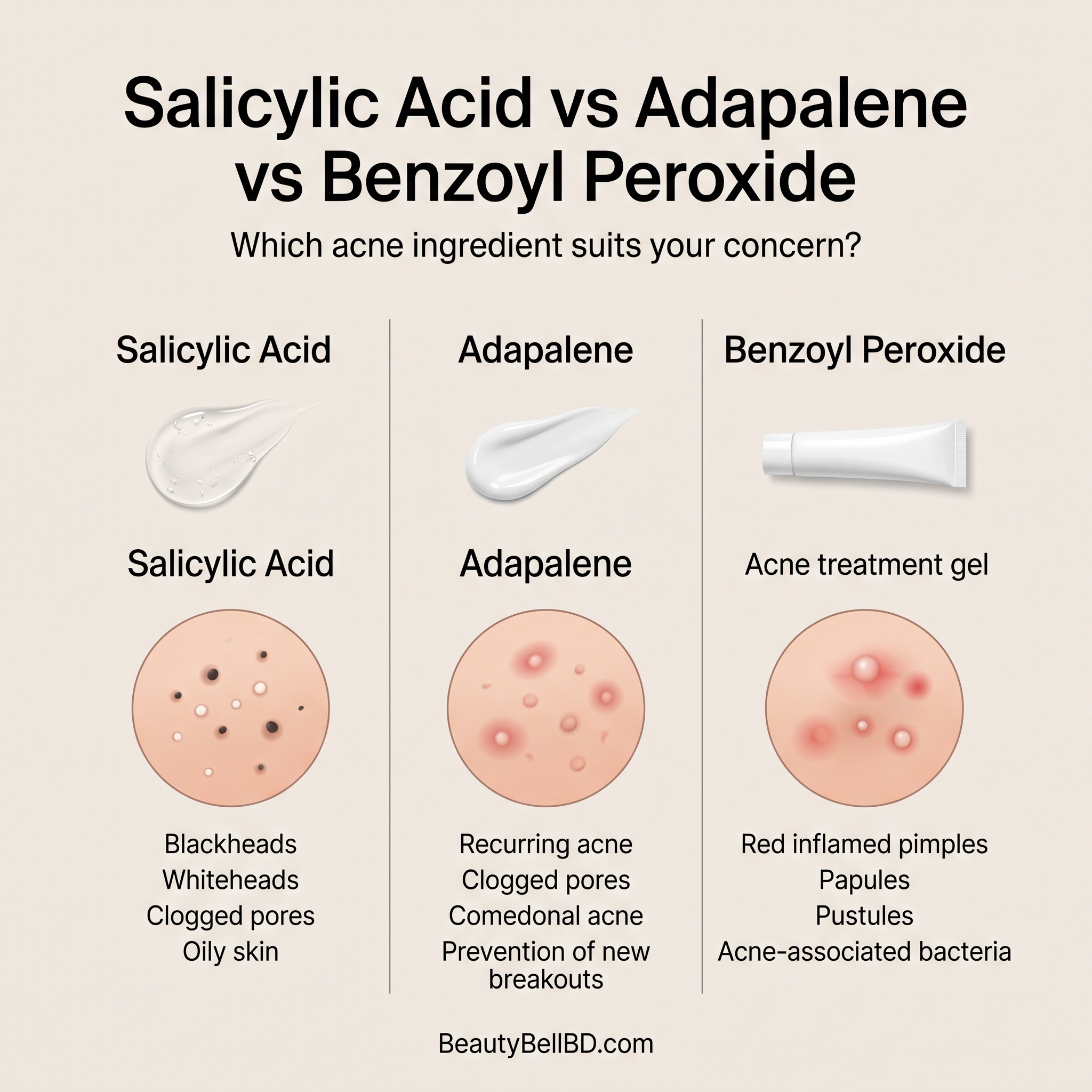
Salicylic acid, adapalene and benzoyl peroxide all have roles in acne management, and current dermatology guidelines include salicylic acid, topical retinoids and benzoyl peroxide among topical acne-treatment options.
The important difference is what each ingredient primarily does.
If your skin is mostly oily and congested with blackheads or whiteheads, salicylic acid may be a logical place to start. If clogged pores and recurring acne keep returning, adapalene may provide broader long-term comedonal acne management. If your breakouts are red and inflamed, benzoyl peroxide can be particularly useful because of its antimicrobial activity.
Combination treatment can also be appropriate because acne often involves more than one mechanism.
Quick Answer: Which One Should You Choose?
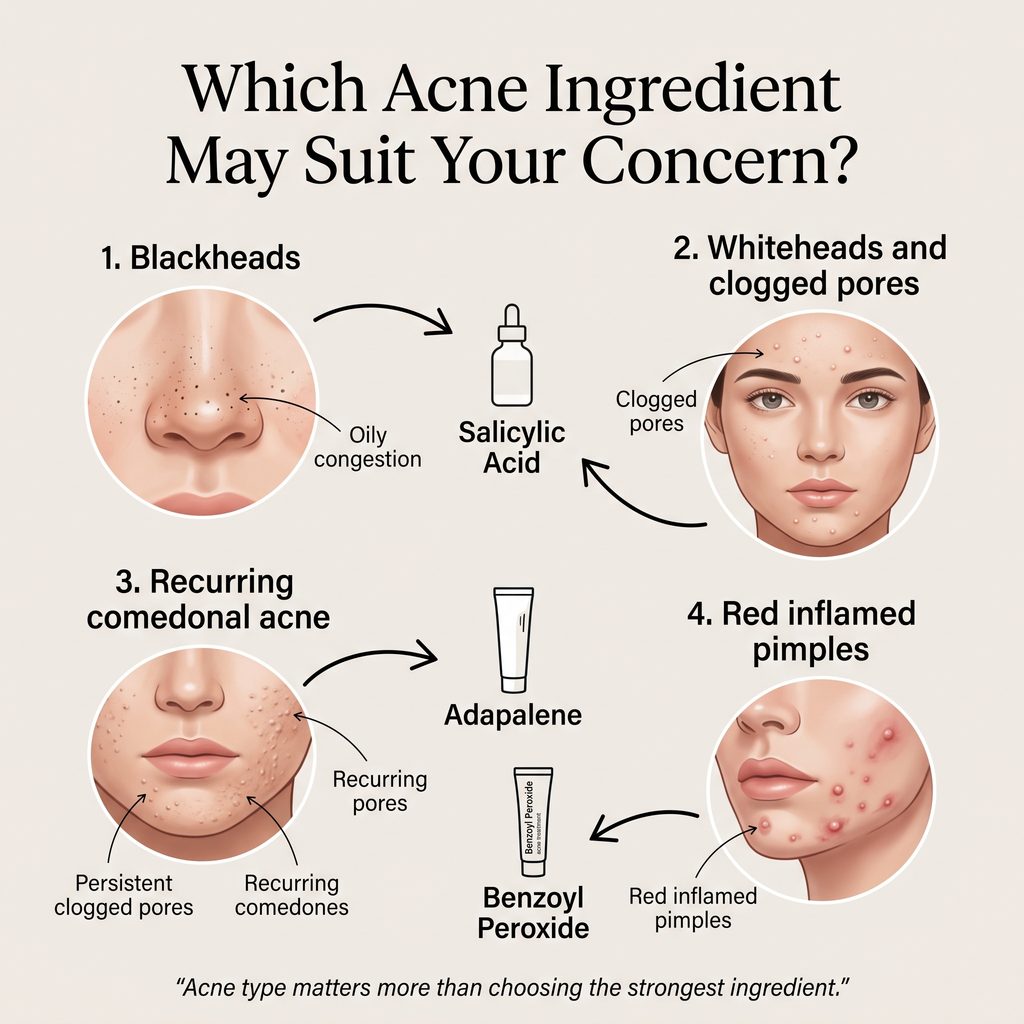
Think about your dominant acne concern.
For blackheads, whiteheads and oily clogged pores:
Salicylic acid is often the simplest starting point.
For recurring comedonal acne and prevention of new clogged pores:
Adapalene can be especially useful.
For red, inflamed pimples:
Benzoyl peroxide is often particularly relevant.
For mixed comedonal and inflammatory acne:
Adapalene plus benzoyl peroxide is an established combination approach, although irritation needs to be managed carefully.
People with persistent, severe, painful or scarring acne should seek professional assessment rather than repeatedly adding stronger products to their routine.
What Is Salicylic Acid?
Salicylic acid is a beta hydroxy acid, or BHA, commonly used in cleansers, serums, gels and other products designed for oily or acne-prone skin.
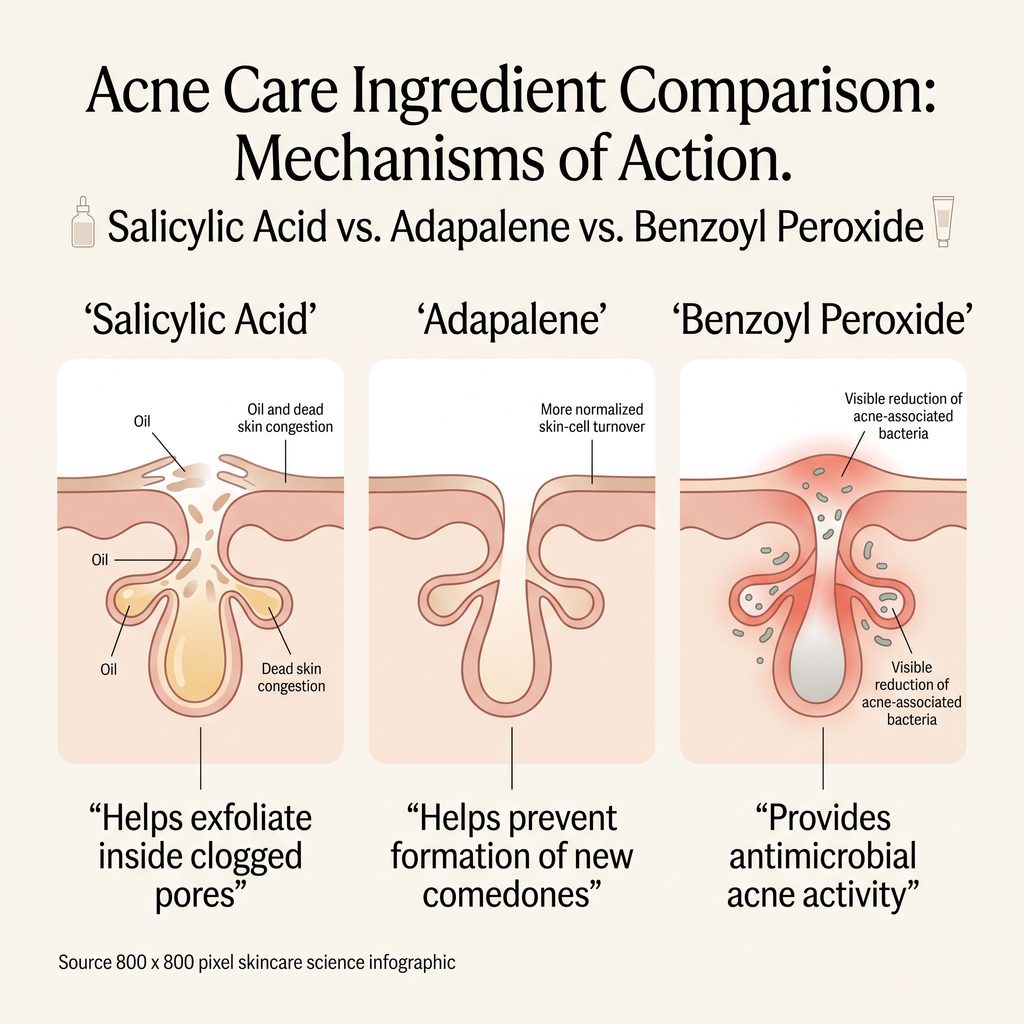
Because salicylic acid is oil-soluble, it can work within oily pores and promote exfoliation of accumulated dead skin cells.
This makes it particularly relevant to:
- Blackheads
- Whiteheads
- Clogged pores
- Excess oil
- Mild comedonal acne
- Rough texture associated with congestion
Salicylic acid is included among the topical therapies recommended in current American Academy of Dermatology acne guidance.
How Does Salicylic Acid Work?
Acne can begin when dead skin cells and sebum accumulate within a hair follicle.
Salicylic acid helps loosen and remove excess dead cells, making it easier to keep pores from remaining congested.
It is therefore often described as a comedolytic or keratolytic ingredient.
It should not, however, be treated as a universal solution for every form of acne.
Who May Prefer Salicylic Acid?
Salicylic acid may be worth considering if you have:
- Oily skin
- Combination skin
- Blackheads around the nose or forehead
- Whiteheads
- Mild clogged pores
- Occasional pimples
- Congested skin texture
A cleanser can provide a gentler introduction, while leave-on salicylic acid products generally provide longer skin contact.
Sensitive skin may require less frequent use.
What Is Adapalene?
Adapalene is a topical retinoid used for acne.
Unlike a cosmetic exfoliating acid, adapalene affects the processes involved in formation of comedones and helps reduce abnormal accumulation of cells inside pores.
Dermatology guidelines strongly support topical retinoids for acne treatment, including adapalene.
How Does Adapalene Work?
Adapalene helps regulate skin-cell turnover within the follicle.
This helps:
- Reduce formation of clogged pores
- Treat blackheads and whiteheads
- Prevent new comedones
- Address inflammatory processes involved in acne
- Support longer-term management of recurring breakouts
Because it works on acne formation rather than simply an individual visible pimple, adapalene is generally applied to the acne-prone area rather than being treated purely as an occasional spot treatment.
How Long Does Adapalene Take to Work?
Adapalene requires consistency.
Official consumer information for adapalene 0.1% notes that improvement may take up to about three months of once-daily use, and temporary worsening or irritation can occur during the early weeks.
Do not interpret a few days without improvement as proof that adapalene has failed.
Who May Prefer Adapalene?
Adapalene may be particularly relevant for people dealing with:
- Recurring acne
- Persistent blackheads and whiteheads
- Closed comedones
- Clogged pores that repeatedly return
- Mixed comedonal and inflammatory acne
It is more likely to cause early dryness, peeling, redness or irritation than a very basic acne-care routine, so gradual introduction and moisturization can matter.
What Is Benzoyl Peroxide?
Benzoyl peroxide is a topical acne active with antimicrobial activity.
It reduces acne-associated bacteria on the skin and is particularly useful when acne includes inflamed lesions.
The American Academy of Dermatology gives a strong recommendation to topical benzoyl peroxide as an acne treatment.
What Is Benzoyl Peroxide Good For?
Benzoyl peroxide can be particularly useful for:
- Red pimples
- Inflamed breakouts
- Papules
- Pustules
- Mild to moderate inflammatory acne
- Combination acne routines
It is available in different concentrations, commonly including 2.5%, 5% and stronger formulations depending on the market.
A higher percentage does not automatically mean a better choice for every person. Higher concentrations can also increase dryness or irritation.
One Practical Warning
Benzoyl peroxide can bleach hair and coloured fabrics, including towels, pillowcases and clothing.
Allow it to dry before your skin contacts fabrics and consider using light-coloured towels or pillowcases.
Salicylic Acid vs Adapalene
Both ingredients can help with clogged pores, but they play different roles.
Salicylic acid exfoliates and helps clear pore congestion. It can therefore be useful for someone primarily dealing with oily skin, blackheads or mild congestion.
Adapalene is a retinoid and acts more directly on the processes that lead to formation of comedones.
Choose Salicylic Acid When:
- Your main problem is blackheads
- Your skin becomes oily and congested
- Your acne is relatively mild
- You want a cleanser or exfoliating treatment
- You are not ready for a topical retinoid routine
Consider Adapalene When:
- Acne repeatedly returns
- Closed comedones are persistent
- You have widespread acne-prone areas
- You need a longer-term acne-management approach
- A healthcare professional has recommended a topical retinoid
This is not necessarily an either-or choice. Some routines can contain both, but introducing both aggressively at the same time can increase irritation.
Salicylic Acid vs Benzoyl Peroxide
The biggest difference is their primary acne target.
Salicylic acid is particularly relevant for clogged pores and comedonal acne.
Benzoyl peroxide is particularly relevant when acne is inflamed.
Salicylic Acid May Suit:
- Blackheads
- Whiteheads
- Oily skin
- Congested pores
Benzoyl Peroxide May Suit:
- Red pimples
- Inflamed acne
- Papules
- Pustules
For someone with both congestion and inflammatory pimples, both mechanisms can be useful, but using multiple drying acne treatments simultaneously may cause excessive irritation.
Adapalene vs Benzoyl Peroxide
This comparison is different because these two ingredients are frequently used together rather than exclusively against each other.
Adapalene helps normalize pore-cell turnover and prevent comedones.
Benzoyl peroxide provides antimicrobial activity against acne-associated bacteria.
Current acne guidelines specifically support combination approaches involving topical retinoids and benzoyl peroxide.
That means a person with both clogged pores and inflamed acne may benefit from targeting more than one acne pathway.
However, combination treatment also increases the importance of:
- Gentle cleansing
- Moisturization
- Gradual introduction
- Sunscreen
- Avoiding unnecessary exfoliating products
Can You Use Adapalene and Benzoyl Peroxide Together?
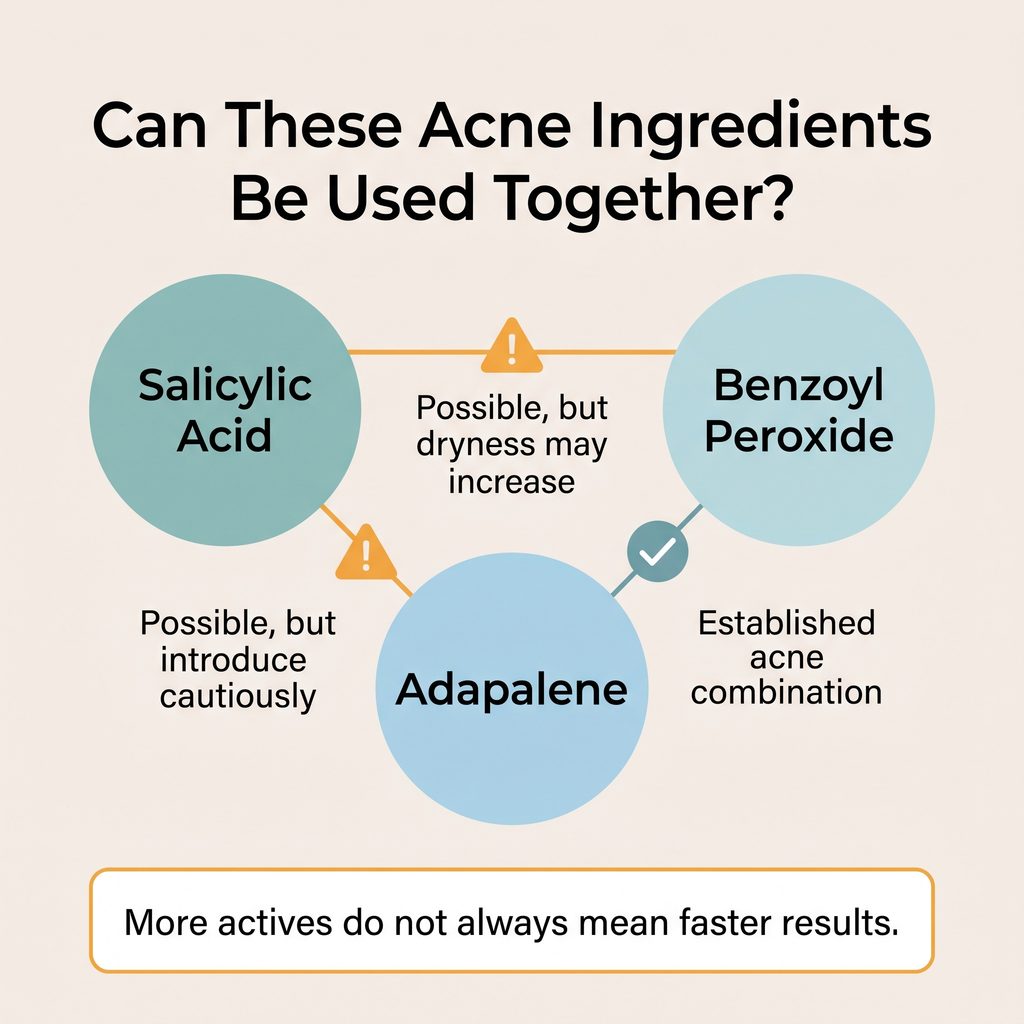
Yes, adapalene and benzoyl peroxide can be used together, and the combination is well established in acne treatment.
Some products even contain both ingredients in a single formulation.
If you use separate products, how they should be introduced depends on the formulation, your skin tolerance and professional advice.
A beginner should not assume that applying large amounts of both products will produce faster results. Too much can instead increase redness, burning, peeling and dryness.
Can You Use Salicylic Acid With Adapalene?
They can sometimes exist in the same broader acne routine, but combining them requires more caution because both can contribute to irritation.
For a beginner, it may be more comfortable to:
- Start adapalene first and establish tolerance
- Use a gentle cleanser
- Add salicylic acid only if additional pore congestion remains
- Use the products at different times or on different days if necessary
If your skin is peeling, burning or persistently irritated, adding another exfoliating active is unlikely to help.
Can You Use Salicylic Acid and Benzoyl Peroxide Together?
It is possible, but again, tolerance matters.
Both can cause dryness and irritation.
Someone with oily skin and a mixture of clogged pores and inflamed pimples might eventually use both, but that does not mean both should be started at maximum frequency on the same day.
A simpler routine is often easier to evaluate.
How to Use Salicylic Acid
Always follow the directions of the specific product because concentration and formulation matter.
A general routine may look like:
- Cleanse the skin gently.
- Apply the salicylic acid product according to its directions.
- Follow with moisturizer.
- Use broad-spectrum sunscreen during the daytime.
If using a leave-on salicylic acid treatment for the first time, introduce it gradually rather than assuming daily use is necessary immediately.
Stop or reduce frequency if persistent burning, significant redness or excessive peeling develops.
How to Use Adapalene
A typical adapalene routine involves application once daily, usually at night, but the instructions of your product or healthcare professional should take priority.
A practical approach is:
- Wash with a mild cleanser.
- Allow the skin to dry.
- Apply a thin amount over acne-prone areas as directed.
- Avoid eyes, lips, broken skin and irritated areas.
- Follow with a suitable moisturizer.
Using more adapalene does not make it work faster.
If dryness is significant, your dermatologist may suggest adjusting application frequency or moisturizer placement.
How to Use Benzoyl Peroxide
Follow the instructions for the particular concentration and formulation you own.
For many leave-on products:
- Cleanse and dry the affected area.
- Apply a thin layer.
- Allow it to dry.
- Follow with moisturizer if needed.
- Use sunscreen during daytime.
New users often tolerate benzoyl peroxide better when frequency is increased gradually instead of immediately using it multiple times daily.
Remember that benzoyl peroxide can bleach hair, clothing and coloured fabrics.
A Simple Beginner Acne Routine
Do not build an acne routine by stacking every active ingredient you can find.
A basic routine is usually easier to tolerate.
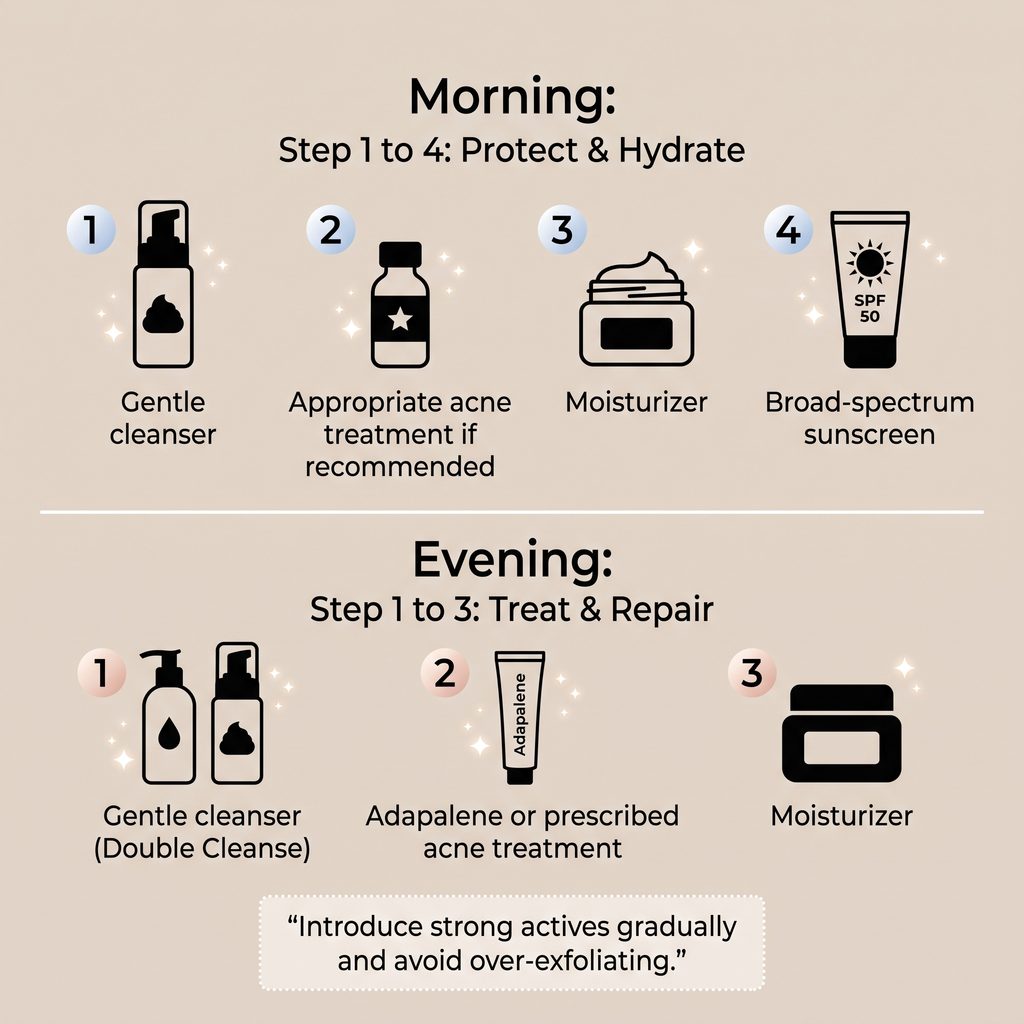
Morning
Use a cleanser that removes oil and sweat without leaving skin extremely tight.
2. Acne Treatment if Appropriate
Depending on your treatment plan, this might be benzoyl peroxide or another recommended acne treatment.
3. Moisturizer
Choose a comfortable moisturizer suitable for acne-prone skin.
4. Sunscreen
Use a broad-spectrum sunscreen consistently.
Evening
1. Gentle Cleanser
Remove sunscreen, makeup and accumulated oil.
2. Treatment
If adapalene is part of your routine, this is commonly where it is applied.
3. Moisturizer
Moisturizing is particularly useful because salicylic acid, benzoyl peroxide and adapalene can all contribute to dryness and irritation.
Do You Need Moisturizer When Using Acne Treatments?
Yes.
Having oily or acne-prone skin does not mean moisturizer should automatically be removed from your routine.
The American Academy of Dermatology specifically notes that benzoyl peroxide, salicylic acid and topical retinoids such as adapalene can dry and irritate the skin and that moisturizer can help skin tolerate acne treatment.
Look for a moisturizer that feels comfortable and does not aggravate your acne.
Why Sunscreen Matters During Acne Treatment
Sunscreen should be part of the routine, especially when using acne treatments that can leave the skin irritated or more vulnerable to sun exposure.
Inflamed acne can also leave post-inflammatory hyperpigmentation, which may appear as persistent darker marks after a breakout.
Use a broad-spectrum sunscreen according to its directions and reapply when necessary based on exposure.
For Bangladesh’s strong daylight and outdoor exposure, this step should not be treated as optional simply because the main concern is acne.
Which Ingredient Is Better for Oily Skin?
There is no single answer based only on skin type.
If oily skin mainly comes with congestion and blackheads, salicylic acid can be very useful.
If oily skin comes with recurring comedonal acne, adapalene may be more appropriate.
If oily skin has frequent red and inflamed pimples, benzoyl peroxide may be useful.
The type of acne matters more than oiliness alone.
Which Is Better for Blackheads?
For predominantly blackheads and clogged pores, salicylic acid is often a practical first option.
Adapalene can also treat comedonal acne and may be worth considering when the problem is persistent or repeatedly returns.
Benzoyl peroxide is generally not the first ingredient selected solely because someone has blackheads.
Which Is Better for Whiteheads?
Both salicylic acid and adapalene can be relevant.
For occasional mild congestion, salicylic acid may be enough.
For widespread or persistent closed comedones, adapalene may offer a more comprehensive acne-management approach.
Which Is Better for Red Inflamed Pimples?
Benzoyl peroxide becomes particularly relevant when acne is inflamed because of its antimicrobial activity.
Adapalene also contributes to acne treatment and is frequently combined with benzoyl peroxide when a patient has both comedonal and inflammatory lesions.
Persistent painful acne should be assessed professionally.
Which Is Better for Acne Marks?
This requires an important distinction.
Salicylic acid, adapalene and benzoyl peroxide are primarily discussed here as acne treatments, not as guaranteed dark-spot removers.
Preventing new inflammatory acne can indirectly reduce the number of new post-acne marks that develop.
Existing post-inflammatory hyperpigmentation may require a different strategy involving sun protection and appropriate pigmentation-focused ingredients.
Do not repeatedly apply stronger acne treatments to a flat dark mark simply because a pimple previously existed there.
What Should You Avoid While Starting These Treatments?
Avoid turning your routine into an aggressive combination of:
- Salicylic acid
- Adapalene
- Benzoyl peroxide
- Strong AHA exfoliants
- Scrubs
- Peeling solutions
- Harsh cleansing
- Multiple retinoids
The problem is not that every combination is universally forbidden.
The problem is cumulative irritation.
Skin that is burning, cracked, excessively peeling or inflamed is not a sign that treatment is working better.
Sensitive Skin: Which Is Better?
People with sensitive skin need more cautious introduction regardless of the ingredient.
Salicylic acid may still cause dryness or irritation.
Adapalene commonly causes irritation during initial treatment.
Benzoyl peroxide can cause redness, dryness, burning or peeling, especially when used too frequently or combined with other irritating topical acne medications.
Use one new active at a time so you can identify what your skin tolerates.
Pregnancy and Acne Treatment
Pregnancy changes the decision substantially.
Adapalene and other topical retinoids are generally avoided during pregnancy.
ACOG lists topical benzoyl peroxide and topical salicylic acid among over-the-counter ingredients that can be used during pregnancy, while dermatology guidance still advises discussing treatment with a healthcare professional and using acne actives appropriately.
If you are pregnant, trying to conceive or unsure whether an acne medicine is appropriate, discuss your routine with your obstetrician or dermatologist before continuing treatment.
When Should You See a Dermatologist?
Professional assessment is appropriate when you have:
- Deep or painful acne
- Nodules or cysts
- Acne that is leaving scars
- Significant post-inflammatory pigmentation
- Acne affecting a large area
- Breakouts that persist despite consistent treatment
- Severe irritation from treatment
- Uncertainty about combining acne medicines
- Pregnancy while using a retinoid
- Significant emotional distress related to acne
Moderate to severe acne may require treatments that cannot be replaced by an online skincare routine.
Salicylic Acid vs Adapalene vs Benzoyl Peroxide: Final Decision
There is no universal winner.
Choose based on the dominant acne problem:
Salicylic acid: mainly useful for oily, congested skin, blackheads and whiteheads.
Adapalene: useful for persistent comedonal acne and preventing formation of new clogged pores.
Benzoyl peroxide: particularly useful for inflammatory acne and red pimples because of its antimicrobial activity.
Adapalene + benzoyl peroxide: an established combination for acne involving multiple mechanisms.
If your acne is mild, start with a simple routine rather than stacking several strong actives. If it is persistent, painful or scarring, professional assessment is more appropriate than continually adding stronger skincare products.
Comparison Table
| Feature | Salicylic Acid | Adapalene | Benzoyl Peroxide |
|---|---|---|---|
| Ingredient type | Beta hydroxy acid (BHA) | Topical retinoid | Antimicrobial acne treatment |
| Main role | Exfoliates and helps unclog pores | Normalizes follicular cell turnover and helps prevent comedones | Reduces acne-associated bacteria |
| Particularly useful for | Blackheads, whiteheads, oily congestion | Persistent comedones and recurring acne | Red, inflamed pimples |
| Blackheads | Very relevant | Relevant | Less targeted |
| Whiteheads | Relevant | Very relevant | Can support broader acne treatment |
| Inflamed acne | Limited as a standalone strategy | Relevant | Very relevant |
| Oil/congestion | Very relevant | Relevant | May help within an acne routine |
| Beginner-friendly | Often, depending on strength | Requires more careful introduction | Often, particularly lower concentrations |
| Common irritation | Dryness, stinging, peeling | Dryness, redness, peeling, burning | Dryness, redness, peeling |
| Typical routine role | Cleanser or leave-on exfoliant | Long-term acne treatment | Inflammatory acne treatment |
| Can combine with adapalene? | Sometimes, cautiously | N/A | Yes, established combination |
| Pregnancy | Discuss use with healthcare professional | Generally avoid | Discuss appropriate use with healthcare professional |
| Extra consideration | Over-exfoliation | Results require consistency | Can bleach fabrics and hair |
Product Recommendations
BeautyBellBD currently carries products representing all three ingredient categories. Product availability and prices can change, so readers should check each product page for the latest information.
Galderma Adaferin Adapalene Gel 0.1% 15g
May suit: People dealing with recurring comedonal acne, blackheads, whiteheads or persistent clogged pores where adapalene is appropriate.
Purpose: Contains adapalene 0.1%, a topical retinoid used for acne.
Why it is relevant: It directly represents the adapalene treatment discussed in this comparison.
Because adapalene can cause irritation and topical retinoids are generally avoided during pregnancy, readers should follow product directions and seek professional advice when appropriate.
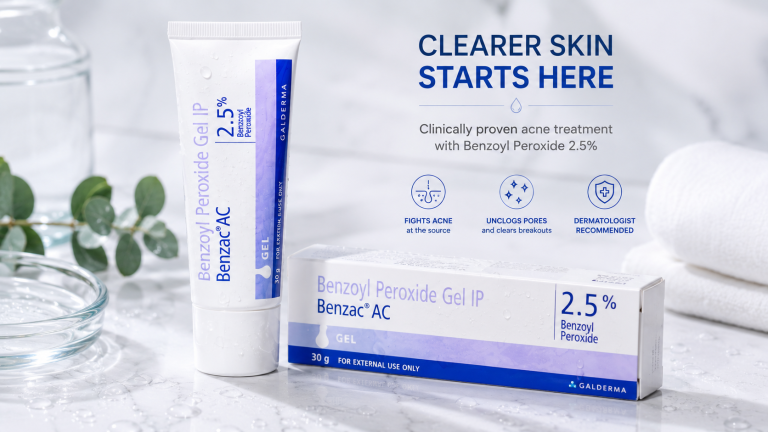
Galderma Benzac AC Benzoyl Peroxide Gel 2.5% 30g
May suit: Acne-prone skin with red or inflamed pimples where benzoyl peroxide is appropriate.
Purpose: Provides 2.5% benzoyl peroxide.
Why it is relevant: It offers a lower-concentration benzoyl peroxide option and directly supports the inflammatory-acne portion of this article.
Zitcare-S 1% Salicylic Acid Gel 20g
May suit: Oily or acne-prone skin dealing with congestion, blackheads and whiteheads.
Purpose: Provides 1% salicylic acid in a leave-on gel format.
Why it is relevant: It gives readers a targeted salicylic acid option rather than a full retinoid or benzoyl peroxide treatment.
The Ordinary Salicylic Acid 2% Solution
May suit: People looking for a leave-on salicylic acid exfoliant for congestion and blemish-prone skin.
Purpose: Provides 2% salicylic acid.
Why it is relevant: It is a stronger leave-on BHA option than a rinse-off cleanser and should therefore be introduced with appropriate attention to irritation.
COSRX Salicylic Acid Daily Gentle Cleanser
May suit: Oily, combination, and acne-prone skin that prefers introducing salicylic acid through a rinse-off cleanser rather than starting with a stronger leave-on exfoliant.
Purpose: Helps cleanse excess oil, impurities, and pore buildup while providing salicylic-acid-based exfoliating support for congested skin.
Why it is relevant: It gives readers a gentler, rinse-off salicylic acid option for daily cleansing and creates a useful contrast with leave-on salicylic acid treatments such as gels or serums.
Salicylic Acid, Adapalene আর Benzoyl Peroxide-এর মধ্যে কোনটা acne-এর জন্য ভালো?
একটাই ingredient সবার জন্য best নয়। Blackheads ও clogged pores-এর জন্য Salicylic Acid, recurring comedonal acne-এর জন্য Adapalene এবং red inflamed pimples-এর জন্য Benzoyl Peroxide বিশেষভাবে relevant হতে পারে। আপনার acne type অনুযায়ী treatment নির্বাচন করা উচিত।
Blackheads-এর জন্য Salicylic Acid নাকি Adapalene ভালো?
Mild blackheads এবং oily clogged pores-এর জন্য Salicylic Acid একটি practical starting option হতে পারে। তবে persistent blackheads এবং recurring comedonal acne থাকলে Adapalene আরও comprehensive acne-treatment option হতে পারে।
Red pimples-এর জন্য Benzoyl Peroxide কি ভালো?
হ্যাঁ, Benzoyl Peroxide inflammatory acne-এর জন্য commonly used ingredient। এটি acne-associated bacteria কমাতে সাহায্য করে এবং red pimples, papules ও pustules-এর treatment plan-এ useful হতে পারে।
Adapalene কি শুধু spot treatment হিসেবে ব্যবহার করা হয়?
সাধারণত Adapalene শুধু individual pimple-এর spot treatment হিসেবে ব্যবহার করার জন্য নয়। এটি acne-prone area-তে thin layer হিসেবে ব্যবহার করা হয়, product directions বা dermatologist-এর advice অনুযায়ী।
Adapalene আর Benzoyl Peroxide একসাথে ব্যবহার করা যায়?
হ্যাঁ, Adapalene এবং Benzoyl Peroxide combination acne treatment-এ ব্যবহার করা হয়। তবে দুটোই dryness বা irritation করতে পারে, তাই নতুন user-এর জন্য gradual introduction গুরুত্বপূর্ণ।
Salicylic Acid আর Adapalene একই routine-এ ব্যবহার করা যাবে?
কিছু মানুষের routine-এ দুটোই ব্যবহার করা সম্ভব, কিন্তু irritation-এর ঝুঁকি বাড়তে পারে। Beginner হলে প্রথমে একটি active-এর tolerance তৈরি করা এবং প্রয়োজন হলে আলাদা সময় বা alternate day ব্যবহার করা বেশি practical হতে পারে।
Salicylic Acid আর Benzoyl Peroxide একসাথে ব্যবহার করা যায়?
ব্যবহার করা সম্ভব হলেও একইসাথে শুরু করলে dryness ও irritation বাড়তে পারে। Combination acne থাকলে routine ধীরে তৈরি করা ভালো এবং skin বেশি irritated হলে frequency কমানো উচিত।
Adapalene ব্যবহার করলে কতদিনে result দেখা যায়?
Adapalene-এর result দেখতে কয়েক সপ্তাহ থেকে কয়েক মাস সময় লাগতে পারে। Official consumer guidance অনুযায়ী once-daily use-এ noticeable result পেতে প্রায় তিন মাস পর্যন্ত লাগতে পারে।
Adapalene শুরু করার পর acne বেড়ে গেলে কী করব?
প্রথম কয়েক সপ্তাহ acne সাময়িকভাবে বেশি noticeable হতে পারে এবং dryness বা irritation-ও হতে পারে। তবে severe burning, swelling বা significant irritation হলে treatment বন্ধ বা adjust করার জন্য healthcare professional-এর advice নেওয়া উচিত।
Oily acne-prone skin-এর জন্য কোন ingredient ভালো?
এটি শুধু oily skin-এর উপর নির্ভর করে না, acne type-ও গুরুত্বপূর্ণ। Blackheads এবং congestion হলে Salicylic Acid, recurring clogged pores হলে Adapalene এবং inflamed pimples হলে Benzoyl Peroxide relevant হতে পারে।
Sensitive skin হলে কোনটি ব্যবহার করব?
Sensitive skin হলে যেকোনো acne active ধীরে শুরু করা উচিত। Salicylic Acid, Adapalene এবং Benzoyl Peroxide তিনটিই irritation করতে পারে, তাই একই সময়ে অনেক active শুরু করা উচিত নয়।
Pregnancy-তে Adapalene ব্যবহার করা যায়?
Pregnancy-তে Adapalene এবং অন্যান্য topical retinoid সাধারণত avoid করার পরামর্শ দেওয়া হয়। Pregnancy বা pregnancy planning থাকলে dermatologist বা obstetrician-এর সঙ্গে treatment review করা উচিত।
Acne treatment-এর সাথে moisturizer ব্যবহার করা দরকার?
হ্যাঁ, moisturizer ব্যবহার করা useful কারণ Salicylic Acid, Adapalene এবং Benzoyl Peroxide skin dry বা irritated করতে পারে। Acne-prone skin-এর জন্য comfortable moisturizer treatment tolerance improve করতে সাহায্য করতে পারে।
Acne treatment করলে sunscreen লাগানো প্রয়োজন?
হ্যাঁ, daytime sunscreen acne-treatment routine-এর গুরুত্বপূর্ণ অংশ। Sun exposure এবং inflammation post-acne dark marks আরও noticeable করতে পারে, তাই suitable broad-spectrum sunscreen ব্যবহার করা উচিত।
Salicylic Acid, Adapalene বা Benzoyl Peroxide Bangladesh-এ কোথায় পাওয়া যায়?
BeautyBellBD-তে Salicylic Acid, Adapalene এবং Benzoyl Peroxide-based selected acne products পাওয়া যায়। Stock, formulation এবং updated price জানতে individual product page check করুন। Persistent বা severe acne থাকলে product কেনার আগে dermatologist-এর advice নেওয়া ভালো।
Final Conclusion
Salicylic acid, adapalene and benzoyl peroxide are not interchangeable acne treatments. Salicylic acid is particularly useful for clogged pores and blackheads, adapalene provides a longer-term approach to recurring comedonal acne, and benzoyl peroxide is particularly relevant for red, inflamed breakouts.
For mixed acne, treatment may involve more than one mechanism, including the established combination of adapalene and benzoyl peroxide. The goal, however, is not to use as many active ingredients as possible. A simple, consistent routine that your skin can tolerate is usually more useful than an aggressive routine that causes persistent irritation.




 English
 Bengali